

# September 2026
September’s Construction Blockchain Newsletter examines the shift from blockchain experimentation towards regulated, operational infrastructure. Central banks and regulators are advancing tokenised settlement, digital securities and supervised virtual-asset markets, while live European pilots demonstrate programmable money entering real transactions. For construction, the implications centre on project payments, procurement, infrastructure finance, material provenance and trusted lifecycle records. The Research Digest highlights new work on tokenised BIM twins, blockchain-enabled procurement and decentralised building logbooks. The issue also previews major upcoming industry events and professional training, emphasising that successful adoption depends less on blockchain itself than on governance, interoperability, authoritative data and enforceable rights.
Construction Blockchain Newsletter
September closes with a clearer shift from blockchain experimentation towards operational, regulated infrastructure. Central banks and market regulators are no longer discussing tokenisation only as a future possibility: settlement rails are going live, controlled trading environments are being authorised and institutions are testing how digital assets fit existing legal and financial systems. For construction, the relevance remains indirect but increasingly practical. Project payments, infrastructure finance, procurement, material provenance and lifecycle records all depend on trustworthy identities, authoritative data, enforceable rights and dependable settlement.
Worldwide, the BIS is taking Project Agorá into a second phase of wholesale cross-border payment research. Europe has moved further, with central-bank settlement and commercial-bank tokenised deposits entering live use. Hong Kong is linking digital bonds with tokenised commodity collateral and carbon assets. In North America, the SEC has opened a controlled route for tokenised US equities, while Brazil is proposing a DLT securities pilot and Ghana is advancing a comprehensive virtual-assets framework.
The Research Digest examines tokenised BIM twins, blockchain-enabled procurement and decentralised building logbooks, while the Events Agenda and Knowledge Upgrade focus on the governance and enterprise skills needed to assess these developments critically.
World & Blockchain
Worldwide

BIS takes Project Agorá into its second phase
Project Agorá is entering Phase Two after the BIS reported promising results from its first stage, while stressing that important questions remain. The initiative brings central and commercial banks together to explore tokenised commercial-bank deposits and central-bank reserves for wholesale cross-border payments. The BIS continues to distinguish this model from stablecoins, citing concerns around singleness of money, integrity and interoperability. For construction and infrastructure supply chains, the relevance is not a new payment token but the prospect of regulated, programmable cross-border settlement built on existing monetary institutions and capable of supporting higher-value enterprise transactions.
Europe
Europe moves tokenised money into live settlement
Europe moved beyond pilot design in late September. On 21 September, the Eurosystem launched Pontes, enabling wholesale tokenised assets to settle in central-bank money. On 24 September, UK Finance announced live customer transactions using tokenised sterling bank deposits, including two remortgage completions; the pilots also explored a future digital connection with HM Land Registry. These are different layers of the monetary system, but together they show regulated digital money entering operational workflows. For construction and real estate, conditional settlement linked to verified completion events is considerably more tangible than generic claims about “blockchain payments”, although scaling, governance and interoperability remain unresolved.
Asia, Middle East & Australia
Hong Kong links tokenisation with commodities and carbon assets
Hong Kong’s 16 September Policy Address set out an unusually integrated tokenisation programme. The Government intends to regularise digital-bond issuance, while the HKMA plans tests of tokenised Exchange Fund Bills. More directly relevant to the built environment, HKEX is targeting a 2027 pilot for tokenised warehouse-receipt financing using physical tracking technologies, alongside a blockchain-backed platform incorporating carbon credits and commodity warehouse receipts. The programme connects tokenisation with physical inventory, collateral and environmental assets. Its success will depend on reliable links between digital records and the underlying commodities rather than the ledger alone.
North America
US regulators open controlled pathways for on-chain markets
On 17 September, the US Securities and Exchange Commission granted temporary, conditional relief allowing specified Tokenized Securities Venues to trade certain tokenised US-listed shares through permissioned automated market makers and liquidity pools. Conditions include equivalent shareholder rights, issuer notification, auditable smart contracts, volume limits and synchronised trading halts. On 24 September, the CFTC also clarified that tokenised forms of permitted investments can be relevant to customer-fund rules and that blockchain may satisfy some recordkeeping requirements. Together, these actions show regulators adapting existing controls to on-chain infrastructure rather than treating tokenisation as a separate legal universe.
South America
Brazil proposes DLT pilot across the securities lifecycle
Brazil’s Comissão de Valores Mobiliários announced on 16 September that its Tokenisation Working Group had submitted a draft resolution for the proposed Programa Piloto DLT CVM. The pilot would permit experimental issuance, offering, distribution, trading, bookkeeping, custody, central depository and settlement of securities using distributed-ledger networks. It is not yet an operational programme, and that distinction matters. The proposal is intended to test technical, operational and legal feasibility, interoperability, vulnerabilities and possible regulatory gaps. For real estate and infrastructure finance, its scope is notable because the experiments would cover the securities lifecycle rather than token issuance alone.
Africa
Ghana advances comprehensive virtual-assets regulatory framework
On 28 September, the Bank of Ghana published a market update on progress towards a comprehensive regulatory framework for virtual-asset activities. The Bank, Securities and Exchange Commission and Financial Intelligence Centre have stated that virtual assets cannot remain outside Ghana’s financial regulatory perimeter; the authorities estimate that the domestic ecosystem now includes more than three million users. The development is primarily regulatory rather than a signal of institutional construction adoption. Its relevance is that digital settlement and tokenised assets require licensing, financial-integrity controls and clear supervisory responsibility before they can credibly support enterprise or infrastructure transactions.
Research & Development Digest
From trusted records to executable construction workflows
This monthly Research Digest features three newly published studies examining blockchain not as a standalone ledger, but as part of wider construction information, procurement and digital-twin architectures.
A Monte Carlo enhanced agent based model for Tokenized BIM Twin (TBT) resource reallocation in construction projects
Celik Y; Cadirci MS, 2026.
Published on 29 September in Scientific Reports, this paper proposes a three-layer Tokenized BIM Twin framework combining an IFC-based BIM layer for resource tokenisation, a real-time digital twin for detecting deviations, and blockchain smart contracts for transparent resource reallocation. The authors evaluate the approach computationally using agent-based simulation and 150 Monte Carlo iterations across each of three configurations: traditional management, centralised BIM plus digital twin, and the TBT framework. Under the modelled conditions, TBT substantially reduced simulated schedule overrun, resource idle rates and disruption-response time. The result is interesting for construction management because it tests blockchain as part of a dynamic control architecture rather than merely as a document ledger. The limitation is equally important: these are simulated outcomes, not evidence from a live construction project. The paper therefore demonstrates technical and analytical potential, but empirical validation, integration costs, governance and contractual consequences still need to be tested in practice.
DOI 10.1038/s41598-026-66059-2
ProcuTrust: A trustworthy procurement and management system for building services by enabling blockchain integration
Hewavitharana S; Perera S; Jin X; Seneviratne K; Bamdad K, 2026.
Published online by the ASCE Journal of Construction Engineering and Management on 24 September, ProcuTrust addresses procurement and management of building-services systems, where multiple stakeholders, extensive documentation and complex workflows create persistent coordination problems. The authors develop a blockchain-enabled approach intended to support secure, transparent and automated transactions through distributed records and smart contracts. Its construction relevance is direct: building services procurement involves approvals, product information, supply-chain records, contractual obligations and handover evidence that frequently pass between organisations and systems. A blockchain layer may strengthen auditability where participants need a shared history of transactions, but immutability does not remove the need for agreed data ownership, verification or exception management. The paper is therefore most useful as a sector-specific investigation of where blockchain can sit within procurement governance, rather than as evidence that decentralisation by itself resolves fragmented construction processes.
DOI 10.1061/JCEMD4.COENG-18937
Leveraging IFC semantics and W3C decentralized identifiers for Digital Building Logbooks in construction and deep renovation
Kochovski P; Fujs D; Vavpotič D; Chiachío J; Miri P; Stankovski V, 2026.
This Automation in Construction paper presents BUILDCHAIN DBL, a decentralised Digital Building Logbook architecture combining an IFC-aligned ontology, a blockchain layer using W3C Decentralized Identifiers and Verifiable Credentials, and an application layer for credential management and lifecycle monitoring. The authors validate the architecture through a real-world case study at Hospital Real in Granada, Spain, reporting credential-based workflows within interactive latency thresholds below 300 milliseconds. The contribution is especially relevant to construction because it tackles a harder problem than ledger immutability: how heterogeneous BIM, sensor, inspection and regulatory information can remain both semantically interoperable and independently verifiable. The use of IFC semantics, decentralised identity and verifiable credentials also connects building records to emerging digital-identity standards. However, technical feasibility in a case study does not establish organisational scalability; governance, long-term credential stewardship, platform dependencies and alignment with authoritative public and asset-management records remain important implementation questions.
Events Agenda
CBC 2026

Construction Blockchain Conference 2026
5–6 November 2026 — Virtual, hosted from London, UK
CBC2026 examines disruptive technologies against enduring built-environment problems including fragmented supply chains, interoperability, productivity, decarbonisation, cybersecurity and trusted digital governance. The programme combines keynotes, industry cases and research across six themes: transparency and trust, efficiency and automation, collaborative governance, data security, integrated approaches and sustainability. Blockchain is considered alongside AI, digital twins, smart contracts, BIM, IoT and enterprise systems rather than in isolation. That makes the conference particularly relevant to researchers, clients, practitioners, policymakers and technology providers trying to distinguish measurable value from technology-led claims and to understand how emerging technologies fit wider organisational and information architectures.
Singapore FinTech Festival 2026
18–20 November 2026 — Singapore EXPO, Singapore
Singapore FinTech Festival brings together policymakers, financial institutions, technology companies, investors and researchers around the changing infrastructure of finance. The 2026 agenda is particularly relevant to this month’s theme: it includes sessions on real-world assets and tokenisation, cross-border wholesale connectivity, digital currencies, DeFi–TradFi integration and regulatory coordination. For built-environment organisations, the event offers a view of the financial rails on which future tokenised project finance, collateral and payments would depend. It is therefore most useful not as a construction event, but as a place to test construction assumptions against the institutions actually designing and regulating emerging digital-finance infrastructure.
TechFest 2026
25 November 2026 — Hilton London Metropole, London, UK
Powered by Construction News and New Civil Engineer, TechFest brings technology discussion back into the operational context of construction and civil engineering. The programme focuses on the application of technology and innovation across design, delivery, infrastructure and buildings, including AI, automation, digital delivery and low-carbon solutions. Clients, contractors, consultants, architects, technology providers and start-ups are represented. For CBC readers, its value is complementary to financial-sector events: it provides an opportunity to test whether ideas such as tokenisation, trusted data and automated transactions solve recognisable industry problems and integrate with the digital systems already being adopted by project and asset teams.
Knowledge Upgrade
New Finance: Unpacking DeFi, FinTech, Crypto & Blockchain
Provider: Trinity Business School, Trinity College Dublin
Format: Online, synchronous
Start date: 4 November 2026
Duration: Six evening sessions, concluding 9 December 2026
Trinity Business School’s programme provides a synchronous introduction to blockchain, cryptocurrency, digital assets and decentralised finance, with attention to governance, regulation, industry use cases and implementation risks. It is broader than construction and contains practical crypto-oriented content, so it should not be treated as built-environment training. Its value for construction leaders is more specific: developing enough technical and regulatory literacy to challenge tokenisation proposals, distinguish enterprise applications from speculation, and assess whether a blockchain-based use case has credible governance, commercial logic and implementation requirements.
Understanding Blockchain in Construction: A Practical Guide
Understanding Blockchain in Construction: A Practical Guide, is intended to address a persistent gap in the sector: the lack of practical, construction-focused material on blockchain that moves beyond general hype or purely financial use cases. The book examines how blockchain relates to trust, traceability, smart contracts, data exchange and implementation challenges across construction and infrastructure contexts.
# August 2026
August’s Construction Blockchain Newsletter examines how blockchain and digital assets are moving into regulated financial and enterprise infrastructure. The focus is shifting from speculative cryptocurrency towards tokenised bank deposits, programmable settlement and institutional market infrastructure.
Key developments include BIS support for tokenised deposits, ECB exploration of central bank money on distributed ledgers, live tokenised deposit transactions in Asia, new US regulatory proposals, and stronger controls in Brazil and Nigeria.
For construction, these changes matter because project payments, procurement, asset ownership, finance and carbon reporting increasingly depend on trusted digital records, interoperable systems and legally enforceable settlement across complex project ecosystems.
Construction Blockchain Newsletter
August’s issue is framed by a transition that matters more than crypto-market sentiment: regulated tokenised money and institutional DLT are moving from prototypes towards operating infrastructure. Project Agorá has completed controlled real-value cross-border tests; the Eurosystem is putting governance around Appia and Pontes; and major custodians are taking native on-chain recordkeeping into production-oriented services. For construction, the relevance is practical rather than speculative: cross-border procurement, project treasury, fund administration, collateral, progress payments and auditable project evidence all depend on settlement and data systems that can survive regulatory, legal and operational scrutiny.
Worldwide, BIS testing shows programmable settlement under real-value conditions; in Europe, the ECB is formalising market participation around tokenised central-bank settlement. Hong Kong’s HKDAP has entered a controlled institutional rollout, while North America’s BNY is extending transfer agency into natively digital funds. Brazil is adding temporary safeguards to higher-risk virtual-asset transfers, and South Africa is consulting on a cross-border crypto framework.
This month’s Research Digest examines programmable project payments, adaptable smart-contract workflows and carbon evidence, while the Events Agenda and Knowledge Upgrade focus on infrastructure, governance and enterprise capability.
World & Blockchain
Worldwide

Project Agorá Moves Tokenised Payments into Real-Value Testing
The Bank for International Settlements moved Project Agorá beyond purely simulated transactions in July, conducting controlled real-value tests involving tokenised central-bank reserves and commercial-bank deposits. Twenty-eight financial institutions and participating central banks tested 17 transaction scenarios across multiple currencies. The amounts remain deliberately modest, so this should not be confused with production-scale deployment. Its importance is architectural: it tests whether regulated money can move across programmable infrastructure without abandoning central-bank settlement. For construction, such systems could eventually affect cross-border procurement, professional fees and conditional project payments, provided interoperability, legal finality and operational controls are resolved.
Europe
Eurosystem Formalises Governance for Appia and Pontes Tokenisation
On 19 August, the European Central Bank announced 61 financial-market and public-sector participants for the Appia contact group, which begins work in September. The group will support both Pontes, intended to connect DLT-based market platforms to TARGET Services for settlement in central-bank money, and the longer-term Appia vision for an integrated European ecosystem for tokenised finance. This is institution-building rather than a technology launch, but that distinction matters. Infrastructure and real-estate tokenisation will require credible settlement, governance and legal interfaces around the tokens themselves. Europe is therefore addressing the less glamorous, but more consequential, problem of connecting distributed systems to regulated financial-market infrastructure.
Asia, Middle East & Australia
HKDAP Starts Controlled Rollout of Regulated Hong Kong Dollar Stablecoin
Anchorpoint began beta access to HKDAP on 12 August, introducing an HKD-denominated stablecoin under Hong Kong’s new regulatory framework. The published documentation states that HKDAP is backed by a reserve pool at least equal to the par value of tokens in circulation and operates under the territory’s Stablecoins Ordinance. Initial distribution remains controlled rather than genuinely mass-market. That restraint is important: the immediate signal is not retail crypto adoption, but regulated programmable money entering institutional workflows. For construction businesses operating across Asian supply chains, the longer-term relevance lies in treasury, supplier settlement and trade-finance processes, although regulatory permissions and interoperability will determine whether practical advantages emerge.
North America
BNY Puts Native Fund Transfer Agency On-Chain
BNY launched global digital transfer-agency capabilities on 29 July to support digitally native investment funds across traditional and blockchain infrastructure. Its model allows the legal representation of fund books and records to exist on a public blockchain, while integration with conventional servicing and compliance processes is retained. BNY also plans support for fiat and stablecoin subscriptions and redemptions. The built-environment connection is primarily through capital rather than site operations: tokenised real-estate and infrastructure funds require credible ownership registers, servicing, custody and investor administration. The development suggests institutional tokenisation is increasingly becoming a records-and-governance problem, not simply a question of issuing tokens.
South America
Brazil Adds 24-Hour Safeguard to Higher-Risk Virtual Asset Transfers
Brazil’s central bank has strengthened anti-fraud controls for virtual-asset transfers, including a temporary preventive hold of up to 24 hours in specified higher-risk circumstances. The measure covers transfers above US$10,000 to overseas virtual-asset providers or self-custody wallets, alongside transactions identified through risk monitoring, and is due to take effect on 1 January 2027. The hold is precautionary rather than an automatic prohibition. The wider lesson for enterprise adoption is straightforward: digital-asset settlement will not eliminate treasury controls. Contractors and infrastructure groups considering wallet-based international payments will still need transaction monitoring, audit evidence, counterparty controls and jurisdiction-specific compliance processes.
Africa
South Africa Drafts Rules for Cross-Border Crypto Transfers
South Africa’s National Treasury and Reserve Bank published a Draft Crypto Asset Manual for consultation in August as part of a broader revision of capital-flow controls. The proposal seeks to clarify how cross-border crypto-asset activity should interact with the country’s financial-surveillance framework. Reporting suggests that transfers from authorised domestic providers to offshore providers or private wallets would face defined reporting and authorised-channel requirements under the proposed regime. These remain consultation proposals, not final rules. For construction and infrastructure businesses operating across African jurisdictions, the development reinforces a recurring theme: blockchain-based payments may change the transaction rail, but they do not remove foreign-exchange, reporting or counterparty obligations.
Research & Development Digest
Programmable Settlement, Workflow Governance & Verifiable Project Evidence
This monthly Research Digest features three recent, verified studies that move the discussion away from generic blockchain advocacy and towards operational questions: how physical construction progress becomes credible payment evidence, how smart-contract workflows can change without destroying process continuity, and how embodied-carbon information can be made traceable.
Digital twin-enabled BIM-blockchain integration for automated and transparent construction progress payments
Wu Y; Li Z, 2025.
Published in Developments in the Built Environment, this study addresses one of the hardest problems in construction smart contracts: the “oracle” problem of establishing whether physical work has actually occurred before an automated payment is released. The proposed framework uses a digital twin to compare site information with BIM-defined milestones, with blockchain recording contractual state and payment logic. Supporting evidence is retained off-chain, while cryptographic references and multi-signature governance are used to preserve traceability and stakeholder control. A prototype police-station case is used to demonstrate the workflow. The significant contribution is not simply faster payment automation, but the attempt to connect trusted physical evidence, contractual approval and blockchain execution. The results remain prototype evidence rather than proof of industry-wide scalability, particularly where progress assessment remains subjective or disputed.
DOI: https://doi.org/10.1016/j.dibe.2025.100781
Cascaded and upgradable smart contracts for blockchain-aided construction business process management
Ye X; Tao X; Cheng JCP; König M, 2026.
Published in Automation in Construction, this paper tackles a weakness often overlooked in construction blockchain proposals: real project processes change. The authors propose a smart-contract-enabled construction business process management framework using cascaded contracts to coordinate interdependent tasks and access permissions, together with upgradable contracts that allow workflow logic to evolve without discarding existing process data. The approach is evaluated through BIM design collaboration and payment-automation scenarios, with gas consumption and transaction latency also examined. This is important because immutable code is not automatically good governance. Construction projects require controlled change, delegation, exceptions and traceable revisions over long delivery periods. By treating adaptability as an architectural requirement rather than a failure of blockchain purity, the study offers a more credible model for enterprise use than static one-contract-per-process demonstrations.
DOI: https://doi.org/10.1016/j.autcon.2025.106695
Transformational emissions accounting system using BIM- and blockchain-enabled smart contracts for building structural materials
Yoon JH; Aurangzeb I, 2026.
Published online in Architectural Engineering and Design Management, this paper proposes an emissions-accounting architecture combining BIM data extraction with blockchain-enabled smart contracts for structural materials including steel, concrete and mass timber. The research responds to a genuine information-management problem: embodied-carbon calculations depend on evidence originating across designers, suppliers, manufacturers and contractors, while conventional records can be incomplete or difficult to audit retrospectively. BIM provides the structured project and material information, while blockchain is proposed as the traceability and immutability layer for carbon records and associated transactions. The concept could support regulatory reporting, certification and incentive mechanisms, but blockchain does not validate inaccurate source data. Its practical value therefore depends on robust product information, common identifiers, agreed calculation rules and clear responsibility for the evidence entered into the system.
DOI: https://doi.org/10.1080/17452007.2026.2632102
Events Agenda
CBC 2026

Construction Blockchain Conference 2026
5–6 November 2026, hosted from London, UK, with online participation
The eighth Construction Blockchain Conference returns in November with the theme Enduring Challenges: Disruptive Technologies Driving Transformational Change within the Built Environment. Unlike general digital-asset events, CBC 2026 focuses directly on construction and infrastructure, bringing together academic and industry perspectives on blockchain, distributed ledgers, AI, digital trust, smart contracts, automation, transparency and collaborative governance. The value is the opportunity to test emerging technologies against persistent sector problems rather than starting from the technology itself. For researchers and practitioners working on information assurance, contractual processes, project controls or integrated digital delivery, it provides a more directly relevant forum for examining both implementation opportunities and limitations.
European Blockchain Convention
16–17 September 2026, Fira Barcelona Montjuïc, Barcelona, Spain
European Blockchain Convention brings together financial institutions, infrastructure providers, regulators, investors and technology companies across digital assets, tokenisation and blockchain infrastructure. Its relevance to the built environment is indirect but useful: practitioners considering tokenised real estate, infrastructure investment, digital payments or blockchain-enabled assurance need to understand the custody, settlement, regulatory and interoperability infrastructure forming around these markets. As with most broad blockchain conferences, the programme should be filtered critically; the useful material is likely to be found in institutional tokenisation, market infrastructure and regulation rather than speculative product narratives.
Sibos 2026
28 September–1 October 2026, Miami Beach Convention Center, Miami, USA
Sibos is primarily a banking and financial-market infrastructure conference, which makes it unusually relevant to this month’s theme. The 2026 programme includes payments, securities, trade, digital assets and the transition from tokenisation pilots towards regulated platforms. For construction organisations, the value lies upstream of project delivery: international contractors, developers and infrastructure investors depend on cross-border payments, guarantees, treasury services and capital-market infrastructure. Understanding how banks approach interoperability, tokenised deposits, stablecoins and regulated settlement is therefore more useful than treating blockchain as an isolated project technology. It provides a view of the institutional systems into which construction applications would ultimately have to connect.
Knowledge Upgrade
Cambridge Digital Assets for Enterprises
Provider: Cambridge Centre for Alternative Finance, Cambridge Judge Business School
Format: Online
Start date: 29 September 2026
Duration: 8 weeks, approximately 5–6 hours per week
Cambridge’s Digital Assets for Enterprises programme covers blockchain fundamentals, digital money, tokenisation, distributed financial-market infrastructure, regulation, ESG and enterprise strategy. It is not construction-specific, which is arguably an advantage for professionals evaluating enterprise adoption: the difficult questions are increasingly legal, architectural and operational rather than sector-specific. For contractors, developers, asset managers and enterprise architects, the programme provides a structured basis for assessing tokenised payments, financial products and blockchain services against governance, compliance, integration and risk requirements rather than technological novelty.
Understanding Blockchain in Construction: A Practical Guide
Understanding Blockchain in Construction: A Practical Guide, is intended to address a persistent gap in the sector: the lack of practical, construction-focused material on blockchain that moves beyond general hype or purely financial use cases. The book examines how blockchain relates to trust, traceability, smart contracts, data exchange and implementation challenges across construction and infrastructure contexts.
# July 2026
July 2026 Construction Blockchain Newsletter focuses on the operational infrastructure of trust rather than stablecoins. It examines project-fund traceability, land records, digital credentials, cryptographic resilience and electronic receivables. Research covers land registration, worker certification and digital building logbooks, arguing that effective blockchain adoption depends on governance, interoperability, security and reliable data.
Construction Blockchain Newsletter
July moves the discussion away from the stablecoin and tokenised-settlement themes that framed June. Regulated finance remains relevant, but this issue concentrates on the less visible infrastructure of trust: project-fund traceability, public records, verifiable credentials, cryptographic resilience and interoperable commercial documents. These applications matter to construction because the sector depends on long-lived evidence shared across clients, designers, contractors, regulators and asset operators. A ledger is useful only where it improves accountability without weakening legal authority, privacy or correction mechanisms.
Worldwide, the World Bank is embedding blockchain-based fund tracking into project finance. Europe is extending shared public-sector blockchain infrastructure, Andhra Pradesh is piloting integrated land records, and NIST is pressing organisations to make cryptography replaceable. Brazil offers a useful counter-example through legally recognised electronic receivables, while a Swiss–African programme is testing blockchain ventures against operational markets rather than pitch-deck claims.
The Research Digest examines land registration, workforce credentials and digital building logbooks, while the Events Agenda and Knowledge Upgrade focus on identity, security and enterprise implementation.
🔊 Listen to the GenAI Newsletter Podcast 🔊 收听 GenAI 新闻通讯播客t 🔊 Ouça o podcast do boletim GenAI
Construction Blockchain
🔊 Listen to the GenAI Newsletter Podcast 🔊 收听 GenAI 新闻通讯播客t 🔊 Ouça o podcast do boletim GenAI Construction Blockchain
World & Blockchain
Worldwide

World Bank Embeds FundsChain in Development-Project Administration
The World Bank’s FundsChain rollout is moving blockchain from demonstration into routine project-finance administration. The platform records commitments, payments and disbursements, with 2026 project documents showing adoption across infrastructure, social-protection and digital-development programmes. For construction, the significance is not cryptocurrency: it is the possibility of tracing public funds through multiple implementing bodies and suppliers. However, transparent transactions do not guarantee value for money or physical delivery. FundsChain still depends on accurate source records, disciplined financial management, audit and effective links between payments, procurement milestones and verified work on site.
Europe
EBSI Update Moves Public Blockchain Towards Operational Services
The European Commission is continuing to expand the European Blockchain Services Infrastructure through EUROPEUM-EDIC, a consortium created to support cross-border public services and decentralised technologies. Updated EBSI documentation covers verifiable credentials, decentralised identifiers, data anchoring, tokenisation and smart-contract services. The built-environment opportunity lies in portable professional credentials, permits, product declarations and authoritative records exchanged between jurisdictions. Yet the governance challenge is substantial: a technically verifiable credential is only useful when issuers, relying parties, revocation rules and legal responsibilities are clearly defined. Europe is building common infrastructure, not creating automatic trust in every record placed upon it.
Asia, Middle East & Australia
Andhra Pradesh Pilots Blockchain Land Records Across Seven Districts
Reporting by The New Indian Express says Andhra Pradesh launched a two-month Mee Bhoomi–Blockchain land-records pilot on 23 July. Built on Hyperledger Fabric by Indian public-sector technology bodies, it assigns a digital identity to each parcel and links Revenue, Survey and Registration records across 137,763 parcel maps in 89 villages. The construction relevance is immediate because land certainty underpins acquisition, planning, valuation and infrastructure delivery. Nevertheless, blockchain cannot correct an inaccurate survey or resolve competing legal claims by itself. The pilot should therefore be judged by reconciliation quality, appeals, authorised amendments and citizen access—not by claims that records are simply “tamper-proof”.
North America
NIST Makes Crypto-Agility Essential for Long-Lived Digital Records
NIST updated its guidance on cryptographic agility on 29 June, defining the organisational capability to replace algorithms across software, hardware, protocols and infrastructure while maintaining operations. The publication is not blockchain-specific, but it is highly relevant to long-lived distributed records. Building logbooks, land registries and infrastructure evidence may need to remain verifiable for decades, while today’s signatures and key-management choices will not remain secure indefinitely. Enterprise architects should therefore avoid immutable technical dependency: ledger platforms need cryptographic inventories, upgrade paths, governance for key replacement and evidence-preservation strategies. Permanence of records must not mean permanence of vulnerable cryptography.
South America
Brazil Activates Traceable Electronic Trade Receivables
Brazil’s central bank began the operational phase of its book-entry trade-receivables ecosystem on 30 June, replacing fragmented physical instruments with standardised, traceable electronic records. This is relevant to construction because receivables finance is commonly used by smaller suppliers facing long payment cycles. It is also a useful corrective to blockchain enthusiasm: the Brazilian model demonstrates that legal reform, interoperable registries and common data standards may deliver traceability without a distributed ledger. The test is whether the system reduces duplicate financing, improves creditor certainty and broadens affordable credit. Technology choice should follow institutional requirements, rather than being treated as the objective.
Africa
Swiss - African Programme Tests Blockchain Ventures Against Real Markets
A Swiss–African innovation programme is running across Zurich and Stellenbosch during July, combining blockchain training, venture development and guided market exploration. The initiative invites applications across logistics, agriculture, legal services, health and social impact, rather than limiting blockchain to financial trading. Its relevance to construction lies in testing whether provenance, contracting or infrastructure-data ventures can survive customer, governance and implementation scrutiny. This remains an innovation programme, not evidence of successful deployment. Its value will depend on whether participants validate specific problems, identify accountable data owners and develop systems that integrate with African legal, commercial and public-sector institutions.
Research & Development Digest
Land Records, Workforce Credentials and Digital Building Logbooks
This monthly Research Digest features three recent studies examining blockchain-supported land administration, construction workforce credentials and lifecycle building information.
Practicality of Blockchain Technology for Land Registration: A Namibian Case Study
Paavo JP; Rodríguez-Puentes R; Chigbu UE, 2025.
Land, 14(8), Article 1626.
Paavo, Rodríguez-Puentes and Chigbu use design-science research to develop a roadmap for a blockchain-supported land-registration system suited to Namibia and wider sub-Saharan African conditions. The paper moves beyond broad claims about immutable records by examining system design, integration, testing, validation and deployment. Its construction relevance is foundational: uncertain title and fragmented land information delay acquisition, finance, planning and infrastructure delivery. The authors show why technical architecture must be aligned with land-administration policy and institutional capacity. The central limitation is also important. A distributed ledger cannot determine whether an original claim is lawful, correct a poor cadastral survey or replace public authority. Adoption therefore requires trusted identity, authoritative data capture, lawful amendment procedures, privacy controls and accessible dispute resolution. The paper is best read as an implementation framework, not proof that blockchain alone can secure land rights.
DOI URL: https://doi.org/10.3390/land14081626
Kumi L; Jeong J; Jeong J, 2025.
Advanced Engineering Informatics, 68, Article 103784.
Kumi, Jeong and Jeong develop and evaluate a blockchain-enabled system for managing construction-worker certifications. The design combines smart contracts with decentralised document storage to support worker registration, credential verification and authorisation for safety-critical tasks. In a simulated construction-project environment, the authors report reduced administrative delay, stronger compliance enforcement and improved cost efficiency. This addresses a credible industry problem: paper certificates and disconnected databases make it difficult to confirm whether workers are trained and currently authorised. The approach could support portable credentials across contractors and projects, particularly where multiple employers share a site. However, deployment would require agreement on approved issuers, identity matching, expiry and revocation, data protection and responsibility for erroneous credentials. Blockchain can make the certification history harder to alter; it cannot guarantee the quality of the training, the competence of the worker or safe behaviour on site.
DOI: https://doi.org/10.1016/j.aei.2025.103784
Digital Building Logbooks – The BUILDCHAIN Vision
Landi F; Friedman N; Chiachio-Ruano J; Stankovski V; Stamoulis G; Osmokrovic I; Cioni R; Malovrh Rebec K; Rakic B; Djungha JP; Alvarez Trujillo J; Slobodnik J; Croce P, 2025.
Landi and colleagues present the BUILDCHAIN vision for digital building logbooks supported by a decentralised knowledge base. The proposed environment connects administrative records, design and construction information, inspections, sensor data, performance evidence and maintenance activities across the building lifecycle. Its construction relevance is considerable: reliable logbooks could support regulatory compliance, renovation planning, structural assessment, energy performance and asset transactions without repeatedly reconstructing fragmented histories. The authors emphasise traceability and shared knowledge rather than cryptocurrency, positioning blockchain-related mechanisms within a broader data architecture. The paper nevertheless describes a research vision and developing use cases, not a proven industry-wide platform. Practical success will depend on persistent asset identifiers, semantic interoperability, access permissions, data-quality assurance and clear responsibility for updating records. A logbook becomes trustworthy through governance and verification; decentralisation alone does not make incomplete or obsolete building data dependable.
Events Agenda

Sibos 2026
28 September–1 October 2026 | Miami Beach Convention Center, Miami Beach, United States
Swift’s annual Sibos conference brings together banks, payment infrastructures, regulators, technology providers and corporate treasury specialists. The 2026 programme includes more than 250 sessions across payments, securities, foreign exchange, trade, ESG and digital assets. Its relevance to construction is operational rather than sector-specific: major contractors and infrastructure owners depend on cross-border payments, guarantees, trade documentation, identity, reconciliation and resilient treasury systems. The event is most useful for finance, procurement and enterprise-architecture leaders testing whether new digital rails can integrate with established controls. It should not be treated as evidence that every emerging technology is ready for project deployment.
Identity First Security Summit Europe
6 October 2026 | Frankfurt, Germany
This one-day Frankfurt summit focuses on identity-first security, zero-trust architecture, privileged access, continuous verification and identity-threat detection. It is aimed at chief information security officers, identity specialists, technology leaders and strategic decision-makers in critical industries. For construction enterprises, identity is the missing control layer behind many proposed blockchain applications: organisations must know who issued a credential, who may update a record and which machine or application initiated a transaction. The programme is therefore relevant to workforce credentials, supplier onboarding, common data environments and digital building records. Its value lies in security architecture, rather than in promoting blockchain as a standalone solution.
Blockchain Africa Conference 2026
15 October 2026 | Gauteng, South Africa
The twelfth Blockchain Africa Conference will examine digital-asset policy, tokenisation, institutional infrastructure and African market conditions. The event combines international and regional speakers and is intended for policymakers, financial institutions, technologists, entrepreneurs and organisations assessing blockchain applications. Built-environment participants should concentrate on land administration, infrastructure finance, supply-chain provenance and public-sector accountability, while treating broader cryptocurrency claims cautiously. The conference offers regional context that is often missing from European and North American events, but commercial presentations will require scrutiny. Useful evidence should include deployed systems, accountable institutions, operating costs and measurable outcomes—not merely transaction volumes or token-market projections.
Knowledge Upgrade
Hyperledger Fabric: Design, Develop and Deploy
Provider: Linux Foundation Education and Linux Foundation Decentralized Trust
Format: Online and self-paced
Start date: On demand; course page updated 19 July 2026
Duration: Approximately 30 hours
The Linux Foundation’s updated self-paced course provides approximately 30 hours of practical learning on Hyperledger Fabric architecture, identity, certificate authorities, membership services, channels, private data, chaincode and client applications. It is relevant to enterprise architects and developers assessing permissioned networks shared by clients, contractors, regulators or asset operators. The course is technically focused and does not replace legal or process design, but it offers a credible basis for challenging vendor claims and specifying governance, privacy and deployment requirements for industry consortia.
Understanding Blockchain in Construction: A Practical Guide
Understanding Blockchain in Construction: A Practical Guide, is intended to address a persistent gap in the sector: the lack of practical, construction-focused material on blockchain that moves beyond general hype or purely financial use cases. The book examines how blockchain relates to trust, traceability, smart contracts, data exchange and implementation challenges across construction and infrastructure contexts.
# June 2026
The June 2026 Construction Blockchain Newsletter looks beyond speculative crypto narratives and focuses on the rise of regulated digital-market infrastructure. The issue examines stablecoin regulation, tokenised settlement, real-world asset tokenisation and the institutional systems required to make digital financial instruments credible for enterprise use.
For construction, the implications are indirect but important. Trusted digital infrastructure could reshape payments, escrow, supply-chain assurance, carbon evidence, material provenance and project-finance records. Regional developments show uneven progress: Europe is strengthening financial-stability controls, Asia is advancing bank-led tokenisation, North America is testing tokenised securities, and South America and Africa highlight both the appeal and regulatory risks of stablecoins.
The Research Digest focuses on automated payment evidence, BIM-enabled smart contracts and embodied-carbon traceability, while the Events Agenda and Knowledge Upgrade identify opportunities to build practical knowledge around regulated tokenisation.
Construction Blockchain Newsletter
This month’s issue is framed by a marked shift from speculative crypto narratives towards regulated digital-market infrastructure. The latest developments are not really about “blockchain disruption” in the abstract. They concern stablecoin regulation, tokenised settlement, real-world asset tokenisation and the institutional systems needed to make digital financial instruments safe enough for mainstream use. For construction, the relevance is indirect but serious: payments, escrow, supply-chain assurance, carbon evidence, material provenance and project-finance records all depend on trusted, auditable infrastructure.
The regional pattern is uneven. Worldwide, stablecoin infrastructure is becoming the real strategic battleground. Europe is tightening the link between innovation and financial stability, with the UK softening but not abandoning systemic stablecoin controls. Asia is pushing bank-led tokenisation and regulated digital assets. North America is testing whether tokenised securities can fit within existing market structures. South America and Africa show why stablecoins are attractive where payment systems are slow or expensive, but also why regulators are wary.
The Research Digest therefore focuses on automated payment evidence, BIM-led smart contracts and embodied-carbon traceability, while the Events Agenda and Knowledge Upgrade point to the skills needed to evaluate regulated tokenisation without hype.
🔊 Listen to the GenAI Newsletter Podcast 🔊 收听 GenAI 新闻通讯播客t 🔊 Ouça o podcast do boletim GenAI
Construction Blockchain
🔊 Listen to the GenAI Newsletter Podcast 🔊 收听 GenAI 新闻通讯播客t 🔊 Ouça o podcast do boletim GenAI Construction Blockchain
World & Blockchain
Worldwide

Stablecoin value shifts from coins to infrastructure
Reporting suggests that stablecoins are becoming less interesting as speculative instruments and more important as payment infrastructure. Reuters’ recent analysis argues that the long-term value may sit in wallets, custody, compliance, payment processors and settlement services rather than in the tokens themselves. That is relevant to construction because major projects depend on multi-party payment flows, contractual evidence and cross-border suppliers. The useful question is not whether a contractor should “use stablecoins”; it is whether regulated tokenised money can reduce reconciliation, improve auditability and support faster, conditional payments without creating new compliance and liquidity risks.
Europe
ECB opens Appia group for tokenised market infrastructure
On 1 June, the European Central Bank invited financial-market stakeholders and public-sector bodies to join the Appia contact group. The group will support the Eurosystem’s Pontes and Appia work on tokenisation and DLT. Pontes is intended to connect market DLT platforms with TARGET Services so tokenised assets can settle in central-bank money; Appia is the longer-term blueprint for a European tokenised wholesale financial ecosystem. For construction, this matters indirectly but materially: payment certainty, institutional settlement and standardisation are preconditions before smart-contract payment systems can be trusted on large public works or infrastructure programmes.
Asia, Middle East & Australia
DBS to launch tokenised physical gold for retail customers
Reporting from Reuters says DBS will offer tokenised physical gold to retail customers through its digibank app in the second half of 2026. Each DBS Physical Gold Token is to represent one gram of gold held in a dedicated Singapore vault, with the bank also exploring a possible listing on DBS Digital Exchange for accredited investors and institutions. The construction relevance is not gold itself, but bank-grade tokenisation of physical assets. If custody, redemption, valuation and audit rights can be formalised for gold, similar assurance patterns may later be adapted for materials, equipment, warranties or certified environmental attributes.
North America
US Senate committee advances crypto market-structure bill
Reporting suggests the US Clarity Act has moved forward after the Senate Banking Committee advanced digital-asset legislation in May. The bill seeks to clarify when crypto tokens fall under securities, commodities or other regulatory categories, but Democrats raised concerns about anti-money laundering controls and potential conflicts of interest. For construction, the point is not US crypto politics. It is that legal classification still determines whether tokenised project rights, digital payment instruments, escrow-like arrangements or real-asset tokens can be deployed safely. Unclear regulation remains a serious barrier to enterprise adoption, especially where public procurement, insurance and fiduciary duties are involved.
South America
Brazil restricts stablecoin settlement in cross-border eFX
Brazil’s Central Bank has moved to restrict electronic foreign-exchange providers from using stablecoins and cryptoassets to settle overseas payments. Global Finance reports that Resolution 561 will affect how payment institutions and e-money issuers handle cross-border flows from October 2026, while not banning individual crypto trading. The case is a useful warning for construction firms relying on international suppliers, migrant labour remittances or regional payment corridors: tokenised payment rails may be faster, but regulators can quickly reassert control where foreign exchange, AML, traceability and monetary sovereignty are at stake.
Africa
Zimbabwe introduces first dedicated crypto registration rules
Reporting from Reuters says Zimbabwe will require cryptocurrency businesses to register annually with the Financial Intelligence Unit, which sits within the central bank. The rules apply to businesses buying, selling, transferring or safeguarding virtual assets, with unregistered activity now an offence. Zimbabwe’s market has been shaped by weak trust in conventional money, remittances and peer-to-peer activity after earlier restrictions on financial institutions. For construction, the regional significance is practical: where banking rails are expensive or unstable, digital assets may emerge informally before governance is ready. Formalisation can improve oversight, but it does not by itself solve volatility, consumer protection or project-payment risk.
Research & Development Digest
Smart contracts, payment evidence and construction assurance
This monthly Research Digest features peer-reviewed work on blockchain-enabled payment automation, BIM-integrated smart contracts and traceable carbon evidence for construction supply chains.
Construction Payment Automation Through Scan-to-BIM and Blockchain-Enabled Smart Contract
Elsharkawi H; Elbeltagi E; Eid MS; Alattyih W; Wefki H, 2025.
This paper proposes an automated construction payment approach that combines scan-to-BIM workflows with blockchain-enabled smart contracts. Its value is in connecting progress evidence to payment logic, rather than treating smart contracts as a purely legal or financial abstraction. For construction, the contribution is clear: payment disputes often arise because physical progress, valuation and certification are not synchronised. By linking reality capture, BIM-based verification and programmable payment conditions, the study points towards more granular progress assessment and potentially faster payment cycles. The caution is that such systems depend heavily on data quality, model reliability, agreed measurement rules and governance of exceptions. A smart contract does not remove commercial judgement; it formalises part of it.
DOI URL:https://doi.org/10.1016/j.dibe.2025.100781
Martins MG; Melo RSSD; Costa DB, 2026.
This recent paper develops BIM Ledger, a prototype framework using BIM-based validation and Hyperledger Fabric smart contracts to support automated progress payments in cast-in-place concrete work. The focus on concrete is useful because it avoids generic claims and tests blockchain integration against a recognisable construction production system. The paper’s design-science and exploratory case-study orientation makes it relevant to practitioners considering whether payment automation can be integrated with existing project information models. Its construction value lies in linking measured production, contractual rules and auditable records. However, adoption will depend on contractual acceptance, data responsibility, interoperability with common project platforms and confidence that off-chain work status has been correctly captured.
DOI URL: https://doi.org/10.1108/ECAM-11-2025-1861
Pittri H; Godawatte GAGR; Forster AM, 2026.
This paper develops a conceptual framework combining BIM, IoT and blockchain technology for embodied-carbon tracking in construction supply chains. Its relevance is strong because carbon reporting is becoming a compliance, procurement and finance issue, not just a sustainability narrative. The framework addresses a difficult problem: carbon evidence is distributed across suppliers, materials, logistics, design models and project records. Blockchain is positioned as an assurance layer for traceability and tamper resistance, while BIM and IoT provide context and data capture. The paper remains conceptual, so it should not be read as proof of operational readiness. Its main contribution is to structure how digital evidence could support carbon-accounting workflows across fragmented supply chains.
DOI URL: https://doi.org/10.1108/ECAM-07-2025-1065
Events Agenda

Reuters NEXT Asia
9 July 2026, Singapore
Reuters NEXT Asia will convene policymakers, business leaders and technology executives in Singapore, with sessions including digital assets, portfolio strategy, regulation and opportunity in Asia. The event is not construction-specific, but it is relevant for senior built-environment leaders tracking how Asian regulators, banks and capital-market institutions are approaching digital assets, tokenisation and enterprise AI. Singapore remains an important reference point because regulatory clarity, bank participation and digital public infrastructure often shape what becomes commercially credible elsewhere. This is most useful for executives interested in policy and institutional context rather than technical implementation.
Blockchain Summit Latam
5–7 August 2026, Universidad de Chile, Santiago, Chile
Blockchain Summit Latam’s Santiago edition is positioned around financial regulation, commercial banking and financial-system infrastructure, with stated links to Chile’s financial-market regulator, central bank and traditional finance sector. For construction, the relevance lies in Latin America’s active debate around stablecoins, payments, tokenisation and financial inclusion. Contractors working across borders should pay attention to this region because payment innovation and regulatory control are moving at the same time. The event appears most useful for those interested in regulated infrastructure, bank adoption and regional payment corridors rather than speculative crypto markets.
European Blockchain Convention 2026
16–17 September 2026, Fira Barcelona Montjuïc, Barcelona, Spain
European Blockchain Convention returns to Barcelona with a programme covering digital-asset regulation, market structure, institutional adoption, custody, tokenisation and infrastructure. For construction-sector readers, its value is selective: it can help separate enterprise-grade tokenisation from retail crypto noise. The sessions on regulation and institutional capital are particularly relevant where construction firms are considering tokenised payment instruments, digital-asset custody, real-world asset tokenisation or infrastructure-finance models. The event should be approached critically; it is broad and commercially oriented, so the most useful content will involve regulators, banks, infrastructure providers and serious enterprise case studies.
Knowledge Upgrade
Certificate for Module: Tokenisation and Digital Asset Trading
Provider: HKU SPACE
Format: Part-time taught module
Start date: 31 August 2026
Duration: 30 hoursHKU SPACE’s module covers tokenisation of real-world assets, digital-asset trading, blockchain platforms, smart contracts, token issuance, Hong Kong regulation, stablecoin implementation, custody, AML/KYC, wallets, APIs and tokenisation use cases. Although finance-oriented, it is directly relevant to construction leaders evaluating tokenised real estate, project assets, carbon instruments or material-provenance systems. Its value is the combination of regulatory context and practical tokenisation design, rather than speculative trading. The real-estate tokenisation component makes it particularly relevant to built-environment professionals.
Understanding Blockchain in Construction: A Practical Guide
Understanding Blockchain in Construction: A Practical Guide, is intended to address a persistent gap in the sector: the lack of practical, construction-focused material on blockchain that moves beyond general hype or purely financial use cases. The book examines how blockchain relates to trust, traceability, smart contracts, data exchange and implementation challenges across construction and infrastructure contexts.
# May 2026
This May edition takes a commercial view of blockchain in construction, focusing less on crypto regulation and more on tokenised market infrastructure, real-estate tokenisation, digital product passports and auditable supply-chain records.
The regional signals vary: DTCC is advancing tokenised securities infrastructure globally; Europe is moving on Digital Product Passports under the revised Construction Products Regulation; Dubai is progressing real-estate tokenisation; the Federal Reserve is assessing tokenisation’s funding and liquidity implications; Brazil’s Drex programme remains the clearest South American signal; and BCEAO’s work on crypto-assets, tokenisation and monetary stability leads in Africa.
The practical focus is on payment evidence, circular supply chains, material passports, tokenised assets and professional capability.
Construction Blockchain Newsletter
This May edition takes a more commercial view of blockchain in construction. The useful signal is not another general discussion about crypto regulation, but the emergence of tokenised market infrastructure, real-estate tokenisation, digital product passports and auditable supply-chain records. For construction, these developments matter where project finance, payment certification, asset ownership, material provenance and carbon reporting depend on trusted data across multiple organisations.
Across regions, the emphasis is deliberately different from last month. Worldwide, DTCC is moving tokenised securities infrastructure closer to production. Europe’s strongest construction signal is the Digital Product Passport agenda under the revised Construction Products Regulation. In Asia, Dubai is advancing blockchain-based real-estate tokenisation. In North America, the Federal Reserve is framing tokenisation as both a funding opportunity and a liquidity risk. South America remains thinner for high-quality May-specific construction blockchain news, so Brazil’s Drex programme is used cautiously as the safest regional signal. Africa’s strongest May item is BCEAO’s conference on crypto-assets, tokenisation and monetary stability.
This month’s Research Digest, Events Agenda, Business Opportunities and Knowledge Upgrade focus on the practical layer: payment evidence, circular construction supply chains, material passports, tokenised assets and professional capability.
🔊 Listen to the GenAI Newsletter Podcast 🔊 收听 GenAI 新闻通讯播客t 🔊 Ouça o podcast do boletim GenAI
Construction Blockchain
🔊 Listen to the GenAI Newsletter Podcast 🔊 收听 GenAI 新闻通讯播客t 🔊 Ouça o podcast do boletim GenAI Construction Blockchain
World & Blockchain
Worldwide

DTCC moves tokenised securities service towards production
DTCC announced on 4 May that it is advancing development of DTC’s tokenisation service, with more than 50 financial industry firms involved in an industry working group. The organisation says it plans initial limited production trades of securities tokenised through DTC’s service in July 2026, with a wider service launch planned for October 2026. This is not a construction story in itself, but it matters for built-environment finance. Real estate, infrastructure debt, funds and private-market products all depend on credible post-trade infrastructure before tokenisation can become more than a pilot.
Europe
EU passports push construction materials towards auditable data
Europe’s most relevant construction signal is the continuing development of Digital Product Passports. The revised Construction Products Regulation establishes common rules for construction products and a shared information structure for performance, conformity and market surveillance. Related EU work on DPP content for steel notes that construction products such as rebar, structural sections and reinforcing mesh will need interoperable, machine-readable evidence rather than static PDF documentation. Blockchain is not the only possible technology here, but distributed verification, digital signatures and traceable records are becoming commercially relevant for material compliance and circularity.
Asia, Middle East & Australia
Dubai advances blockchain-based real-estate tokenisation
Dubai Land Department is presenting its Real Estate Tokenization project as part of the Real Estate Evolution Space Initiative. The official page describes the project as blockchain-based tokenisation intended to support fractional ownership, wider investor participation, traceability and security. For construction and real estate, this is one of the more direct built-environment blockchain stories this month. The commercial opportunity is clear, but the limitations are equally important: tokenised exposure to property does not remove the need for land registration, valuation, tenancy law, investor protection, custody, AML controls and dispute resolution.
North America
Fed highlights tokenisation’s funding benefits and liquidity risks
Federal Reserve Governor Lisa Cook’s 8 May speech is useful because it avoids a simplistic view of tokenisation. The speech recognises that tokenised assets may help firms diversify funding sources and use digital markets for collateralisation, but also warns that tokenisation still depends on links to existing financial infrastructure and may create a mismatch between token liquidity and the liquidity of the underlying asset. For infrastructure and real-estate tokenisation, that warning is central. A tradable token does not make a building, loan book or infrastructure concession liquid in any simple sense.
South America
Brazil remains the safest South American tokenisation signal
I found no stronger construction-specific South American blockchain story from May that met the same source-quality threshold as the other regional items. The safer regional signal remains Brazil’s Drex programme, which the Banco Central do Brasil frames as a digital version of the Brazilian real issued on a platform operated by the central bank. For construction, the relevance is indirect: if Brazil continues developing regulated tokenised settlement and financial-market infrastructure, future applications could include property finance, receivables, guarantees and supplier payments. It should not be overstated as a live construction use case yet.
Africa
BCEAO puts tokenisation on monetary-stability agenda
The Central Bank of West African States held an international conference in Dakar on 8 May on crypto-assets and digital innovations, explicitly including asset tokenisation, stablecoins and CBDCs. The framing is important because BCEAO treats digital assets as a monetary, prudential, cybersecurity, governance and data-protection issue, rather than merely a fintech opportunity. For African infrastructure and construction markets, this matters because tokenised project finance or blockchain-based payment systems will depend on regional supervisory capacity, interoperable payment infrastructure and credible public-sector oversight. The opportunity is real, but premature adoption would carry obvious institutional and compliance risks.
Research & Development Digest
Blockchain for construction value chains and asset evidence
This monthly Research Digest features three recent peer-reviewed studies on how blockchain may support construction business opportunities through payment automation, circular supply chains and material-passport data.
Wu Y; Li Z, 2025
Wu and Li’s paper is directly relevant to the payment opportunity. The study proposes a prototype in which a digital twin, BIM and blockchain are integrated to automate milestone-based construction progress payments. The digital twin acts as a dynamic oracle, comparing site conditions with structured BIM milestones. Verified achievements trigger Ethereum smart contracts, with evidence stored off-chain via IPFS and payment authorisation managed through multi-signature wallets. The paper reports that the prototype reduced payment verification from several days to minutes in a police-station case study. The finding should be treated cautiously, because prototype conditions are not the same as public-sector procurement or adversarial contract administration. Still, the paper demonstrates the key point: payment automation depends on trusted project evidence, not blockchain alone.
DOI: https://doi.org/10.1016/j.dibe.2025.100781
Mankata LM; Antwi-Afari P; Ng ST, 2025
This article addresses a genuinely operational problem: ESG reporting in construction is often fragmented, difficult to verify and weakly connected across organisational boundaries. The authors propose and test a hybrid blockchain architecture using Ethereum, Hyperledger Fabric and IoT-linked inputs to improve transparency and accountability in ESG data handling. Its interest for construction extends beyond ESG itself. The underlying issue is evidential governance: who records data, who can validate it, and how records remain auditable across contractors, consultants and clients. That has obvious implications for embodied carbon claims, supplier reporting and regulated disclosure on major programmes. The paper does not prove that blockchain is ready for routine deployment at scale, but it does offer a more credible architecture for shared reporting than the usual broad claims about immutable trust.
DOI:https://doi.org/10.1016/j.jclepro.2025.145966
KC A; Senaratne S; Perera S; Nanayakkara S, 2026.
This review examines blockchain-based material passports as a means of managing built-asset information for circularity. It is particularly relevant to this month’s European Digital Product Passport story. The paper argues that BIM and digital twins are central to modelling, visualising and managing material information, while blockchain can provide decentralised, transparent and immutable records across long asset lifecycles. Its proposed conceptual model links BIM, digital twins and blockchain for built asset elements, including off-chain storage and on-chain indexing. The contribution is useful because it avoids treating material passports as static documents. In practice, construction material data must remain accessible and trustworthy through design, construction, operation, repair, deconstruction and reuse. The limitation is that the model still requires empirical testing, governance design and integration with ISO 19650-style information management.
Events Agenda

Digital Construction Week
3–4 June 2026, ExCeL London, United Kingdom
Digital Construction Week is the most construction-specific event in this issue. The official programme positions the event around digital technology in design, construction, engineering, manufacturing and operation, with more than 230 sessions and over 150 exhibitors. It is not a blockchain conference, which is precisely why it matters. Blockchain opportunities in construction will not scale in isolation; they will need to connect with BIM, digital twins, AI, robotics, sustainability tools, data platforms and CDEs. For CBC readers, this is the right environment to test whether blockchain use cases are genuinely useful within wider digital construction workflows.
Global Blockchain & Crypto Symposium 2026
24 June 2026, Andaz London, United Kingdom
The Global Blockchain & Crypto Symposium is a legal and regulatory event covering blockchain, crypto-assets, compliance, crypto-asset tracing and the professionalisation of the sector. Its relevance to construction lies in legal framing. Firms considering tokenised payments, blockchain-based evidence records, smart contracts or real-estate tokenisation need to understand enforcement, tracing, regulatory perimeter, dispute resolution and professional liability. This is therefore useful for legal, compliance, procurement, finance and enterprise-architecture professionals who need to separate practical blockchain adoption from weak or speculative claims.
London Blockchain Finance Summit: RWA Tokenisation
7 July 2026, DLA Piper, London, United Kingdom
This summit focuses specifically on real-world asset tokenisation, including issuance, investment, trading, collateral, post-trade infrastructure, custody, interoperability and legal frameworks. It is relevant to construction because real estate, infrastructure debt, project-finance receivables, private credit and funds are among the asset classes most often discussed in tokenisation strategies. The event is best suited to readers interested in the financial layer around the built environment: how assets are structured, serviced, transferred and governed once represented digitally. It should be approached as an institutional finance event, not a construction technology showcase.
Knowledge Upgrade
Introduction to Digital Assets & Securities
Provider: International Capital Market Association
Format: Classroom, London
Start date: 23 June 2026
Duration: 2 days, with 3 months’ course access
ICMA’s course remains the strongest fit for this issue because it covers digital assets, DLT, blockchain fundamentals, CBDCs, stablecoins, tokenisation and regulatory frameworks from an institutional capital-markets perspective. It is directly relevant to construction business opportunities because tokenised real estate, infrastructure finance, escrow arrangements and programmable settlement cannot be assessed only as technology projects. They sit within securities law, market infrastructure, custody, collateral, settlement and compliance. The course is particularly useful for professionals who need a serious foundation rather than trading-oriented content.
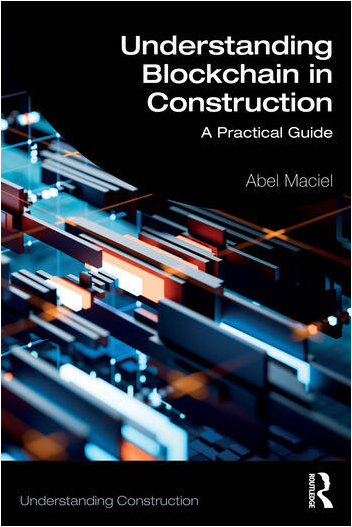
Understanding Blockchain in Construction: A Practical Guide
Provider: Routledge
Format: Book
Publication date: 2026
Understanding Blockchain in Construction: A Practical Guide, is intended to address a persistent gap in the sector: the lack of practical, construction-focused material on blockchain that moves beyond general hype or purely financial use cases. The book examines how blockchain relates to trust, traceability, smart contracts, data exchange and implementation challenges across construction and infrastructure contexts.
# April 2026
This April edition centres on a clearer institutional shift in digital assets: the current signal is less about speculative crypto markets and more about regulated payment instruments, tokenised securities and the market infrastructure needed to support them. Recent developments from the BIS, ECB, SEC, HKMA and national authorities show continued movement towards formal frameworks for stablecoins, tokenised deposits and blockchain-based settlement. For construction and the built environment, that matters where payments, provenance, compliance and multi-party record-keeping intersect with regulated financial and data systems.
Construction Blockchain Newsletter
This April edition centres on a clearer institutional shift in digital assets: the current signal is less about speculative crypto markets and more about regulated payment instruments, tokenised securities and the market infrastructure needed to support them. Recent developments from the BIS, ECB, SEC, HKMA and national authorities show continued movement towards formal frameworks for stablecoins, tokenised deposits and blockchain-based settlement. For construction and the built environment, that matters where payments, provenance, compliance and multi-party record-keeping intersect with regulated financial and data systems.
Across regions, the pattern is uneven but coherent. Europe is debating how euro-denominated tokenised money should scale without reinforcing dollar dependence. In Asia, Hong Kong has moved further into licensing and formal market structure. North America has continued to clarify legal treatment and prudential handling. In South America, the more notable signal remains practical commercial use, particularly the shift away from proprietary tokens towards dollar-linked instruments. In Africa, South Africa’s policy work on rand-pegged and foreign-currency-pegged stablecoins remains one of the more concrete regulatory exercises on the continent.
This month’s Research & Development Digest examines governed digital infrastructure in construction, with a focus on supply chains, ESG reporting and BIM-linked data architecture. The Events Agenda and Knowledge Upgrade then point to current opportunities to follow these developments in greater depth, including a more practice-oriented construction perspective.
🔊 Listen to the GenAI Newsletter Podcast 🔊 收听 GenAI 新闻通讯播客t 🔊 Ouça o podcast do boletim GenAI
Construction Blockchain
🔊 Listen to the GenAI Newsletter Podcast 🔊 收听 GenAI 新闻通讯播客t 🔊 Ouça o podcast do boletim GenAI Construction Blockchain
World & Blockchain
Worldwide

BIS urges coordinated stablecoin rules
The clearest global signal this month came from the BIS. In a 20 April speech in Tokyo, Pablo Hernández de Cos argued that stablecoins should be treated as a matter of monetary and financial architecture, not merely as a fast-moving product market. He noted that the market had reached roughly $315 billion in early April 2026, but that real-economy use remained modest relative to traditional payments. His main point was regulatory: fragmented national approaches risk arbitrage, market fragmentation and policy spillovers, especially in more vulnerable economies. For construction, the implication is indirect but relevant: any blockchain-based payment or assurance layer that scales internationally will depend on coordinated rules, not only technical interoperability.
Europe
Europe pushes harder on euro-denominated digital money
Europe’s April story is not one announcement but a convergence. ECB and Bank of France speeches have continued to frame tokenised deposits and euro-denominated stablecoins as part of Europe’s future market plumbing, with central bank money retained as the stability anchor. At the same time, Reuters reported on 17 April that France’s finance minister called for more euro-pegged stablecoins and backed a banking-sector initiative involving ING, UniCredit and BNP Paribas to launch one later in 2026. The direction is plain enough: Europe is trying to reduce dependence on dollar-linked digital payment instruments while keeping tokenisation inside supervised financial architecture.
Asia
Hong Kong moves from pilots towards licensed stablecoins
Asia’s strongest recent development came from Hong Kong. Reuters reported on 10 April that the HKMA granted its first licences for fiat-backed stablecoins to HSBC and Anchorpoint Financial, the latter a joint venture involving Standard Chartered, Animoca Brands and HKT. That matters because Hong Kong is moving beyond broad tokenisation strategy into actual licensing under a formal stablecoin regime. It fits with the HKMA’s March message that the future lies in integrating traditional and digital finance rather than choosing between them. The regional lesson is straightforward: serious jurisdictions are now testing whether digital money can be embedded into banking, payments and investment workflows under conventional supervisory controls
North America
SEC Clarifies the Application of Federal Securities Laws to Crypto Assets
North America’s most relevant updates remain regulatory. On 17 March, the SEC issued a clarifying release setting out a token taxonomy covering digital commodities, collectibles, tools, stablecoins and digital securities, and explaining how federal securities laws apply across those categories. Earlier, Reuters reported that U.S. banking regulators said banks would not face extra capital charges merely because securities are tokenised, stressing technology-neutral prudential treatment. Neither development resolves the wider political and legislative contest in Washington, but both reduce uncertainty at the level that institutions actually care about: legal classification, supervisory treatment and operational feasibility. That is more consequential than another cycle of crypto rhetoric.
South America
Mercado Pago drops loyalty token, keeps stablecoin focus
South America still offers more evidence of practical use than grand architecture. On 31 March, Reuters reported that Mercado Pago discontinued Mercado Coin, the proprietary token it had launched in 2022, while leaving in place its broader digital-assets activity, including Meli Dolar, its dollar-backed stablecoin introduced in Brazil in 2024. The move is modest, but it is telling. It suggests that branded ecosystem tokens are proving less durable than instruments linked to more familiar monetary functions. For built-environment observers, that distinction matters. Where blockchain survives in enterprise settings, it is more likely to be attached to payments, treasury or settlement logic than to promotional token schemes with thin operational value.
Africa
South Africa deepens formal work on stablecoin policy
Africa’s most concrete recent update remains South Africa’s Exchange Control Circular No. 3-2026. The document states that the Intergovernmental Fintech Working Group will assess in 2026 whether existing regulatory frameworks apply to rand-pegged stablecoin arrangements and examine the policy implications of foreign-currency-pegged stablecoins, with discussion papers intended for public consultation this year. That is a more serious development than most market commentary because it signals regulatory system-building rather than commentary from the sidelines. For infrastructure and real-asset sectors, this is the sort of work that eventually determines whether blockchain-based payment, escrow or reporting mechanisms can operate credibly in regulated settings.
Research & Development Digest
Blockchain & Governed Construction Infrastructure
This monthly Research Digest features three recent, verified papers that are directly relevant to construction rather than generic blockchain advocacy. The common thread this month is governed integration: supply-chain coordination, ESG assurance and BIM-linked data architecture.
Blockchain applications in the construction supply chain
Heydari M; Shojaei A, 2025.
This paper reviews 197 studies on blockchain applications in construction supply chains and is one of the stronger recent syntheses in the field. Its value lies in refusing to treat blockchain as a standalone cure. Instead, it maps recurring supply-chain problems such as poor coordination, weak information sharing, fragmented records and delayed payments, then assesses where blockchain may add value when combined with adjacent technologies and redesigned workflows. The paper also draws lessons from manufacturing, which is useful because construction literature too often behaves as though its problems are uniquely intractable. For practice, the real contribution is not enthusiasm but discrimination: the authors show that visibility, traceability and collaboration benefits depend on governance, interfaces and process design, not on ledger adoption alone. That makes it directly relevant to procurement, materials assurance and off-site delivery chains in the built environment.
DOI: https://doi.org/10.1016/j.autcon.2025.105998
Singh AK; Dugyala NR; Rahimian F; Elghaish F; Mohandes SR, 2025.
This article addresses a genuinely operational problem: ESG reporting in construction is often fragmented, difficult to verify and weakly connected across organisational boundaries. The authors propose and test a hybrid blockchain architecture using Ethereum, Hyperledger Fabric and IoT-linked inputs to improve transparency and accountability in ESG data handling. Its interest for construction extends beyond ESG itself. The underlying issue is evidential governance: who records data, who can validate it, and how records remain auditable across contractors, consultants and clients. That has obvious implications for embodied carbon claims, supplier reporting and regulated disclosure on major programmes. The paper does not prove that blockchain is ready for routine deployment at scale, but it does offer a more credible architecture for shared reporting than the usual broad claims about immutable trust.
DOI: https://doi.org/10.36680/j.itcon.2025.061
Hijazi AA; Alashwal A; Baghalzadeh Shishehgarkhaneh M; Calheiros RN, 2026.
This 2026 review is particularly useful because it moves the BIM–blockchain conversation onto firmer analytical ground. The authors identify six lifecycle stages, 29 workflows and 30 technical methods for integration, showing where blockchain is being linked to design, delivery, compliance and operational information. The strongest contribution is conceptual clarity. Rather than repeating vague claims about “trusted BIM”, the paper distinguishes data types, workflows and implementation mechanisms, including storage choices, smart contracts, hybrid architectures and access controls. For construction organisations, that matters because the real question is not whether BIM can be put on a blockchain, but which records should be anchored, automated or shared, and under what legal and operational controls. It is therefore directly relevant to digital assurance, traceability and model-governance strategy.
Events Agenda
Consensus 2026
5–7 May 2026, Miami, USA
Consensus remains one of the largest global gatherings in the sector, but the 2026 framing is notably institutional: stablecoins, tokenisation and the convergence of crypto, finance and policy are positioned at the centre of the programme. That does not guarantee substance; large events still tend to mix infrastructure with spectacle. Even so, it is a useful barometer of where market attention currently sits. For construction and real-asset professionals, the value is not the wider Web3 theatre but the concentration of discussion around settlement, custody, asset tokenisation and the operational claims now being made by financial institutions and infrastructure providers.
Digital Assets Summit 2026
13–14 May 2026, Convene, 200 Aldersgate, London
This is the more obviously relevant May event for an enterprise audience. Innovate Finance positions the summit around the convergence of crypto, blockchain and mainstream finance, with an in-person and digital format in London. The attraction here is less scale than focus. Events like this are where banks, infrastructure firms, policy stakeholders and institutional market participants test the practical contours of tokenisation, digital money and regulated digital-asset services. For built-environment readers, that matters because any serious application in construction will likely arrive through mainstream financial, legal and compliance channels rather than through crypto-native experimentation alone.
Point Zero Forum 2026
23–25 June 2026, Kongresshaus Zurich, Zurich
Point Zero Forum is useful precisely because it sits at the policy-technology boundary. The 2026 programme in Zurich brings together regulators, central banks and industry on themes including digital assets, payments, AI and financial policy. That makes it more relevant than a typical commercial blockchain event. The forum is not construction-specific, obviously, but it does address the institutional design questions that will shape whether blockchain-based systems for payments, reporting, tokenised assets or digital identity can become credible components of wider enterprise infrastructure. For this newsletter’s purposes, it is a better signal source than most vendor-led showcases.
Knowledge Upgrade
[New Book] Understanding Blockchain in Construction
Understanding Blockchain in Construction: A Practical Guide
Provider: Routledge
Format: Book
Publication date: 2026
This month’s knowledge upgrade is slightly closer to home. Alongside writing this newsletter, I have also recently published Understanding Blockchain in Construction: A Practical Guide, a book intended to address a persistent gap in the sector: the lack of practical, construction-focused material on blockchain that moves beyond general hype or purely financial use cases. The book examines how blockchain relates to trust, traceability, smart contracts, data exchange and implementation challenges across construction and infrastructure contexts. It is written for professionals, researchers and decision-makers who want a more grounded understanding of where the technology may have real value in the built environment, and where its limits still need to be taken seriously.
# March 2026
Welcome to the March edition of the Construction Blockchain Newsletter. This month’s theme is tokenised money as governed infrastructure: the question is no longer whether the technology functions, but whether programmable instruments can be integrated into existing legal, payment, and settlement rails without diluting controls. Cambridge’s latest work is useful precisely because it treats interoperability, claims clarity, and supervisory-grade risk management as the binding constraints. For construction, that is the decisive test: blockchain-enabled payment or assurance layers will only scale where identity, access control, provenance, reporting, and dispute pathways are engineered end to end.
Europe is moving tokenisation from strategy into execution, with the UK’s Digital Gilt Instrument pilot progressing while the Bank of England signals possible revisions to systemic sterling stablecoin constraints. Australia is taking a wholesale, sandbox-first route after Project Acacia, and North America is testing tokenised securities inside regulated market infrastructure under SEC oversight. South America and Africa, meanwhile, highlight the tightening compliance perimeter: Brazil is operationalising supervision through new Central Bank rules, and South Africa’s draft travel-rule guidance makes transfer traceability a non-negotiable requirement.
Construction Blockchain Newsletter
Welcome to the March edition of the Construction Blockchain Newsletter. This month’s theme is tokenised money as governed infrastructure: the story is no longer whether blockchains “work”, but whether regulated institutions can integrate programmable instruments into existing legal, payments, and settlement rails without weakening controls. Cambridge’s latest analysis is valuable precisely because it treats interoperability, claims clarity, and supervisory-grade risk management as the binding constraints. For the built environment, that is the right lens: construction will only adopt blockchain-enabled payment or assurance layers where identity, access control, provenance, reporting, and dispute resolution are engineered end to end.
Regionally, Europe is pushing tokenisation into execution mode, with the UK’s Digital Gilt Instrument pilot advancing while the Bank of England signals it may recalibrate proposed constraints for systemic sterling stablecoins. Asia and Australia show a wholesale, sandbox-first approach, with the RBA positioning a DFMI sandbox after Project Acacia’s lessons on tokenised assets and settlement forms. North America is moving through regulated market infrastructure rather than retail crypto narratives, as exchanges test tokenised securities under SEC oversight. South America and Africa underscore the compliance perimeter tightening: Brazil is operationalising supervision through new Central Bank rules, and South Africa’s draft “travel rule” guidance makes transfer traceability an enforceable expectation.
The Research & Development Digest follows the same logic, focusing on procurement governance, evidence-driven progress payments, and carbon accounting that can withstand audit. The Events Agenda and Knowledge Upgrade are selected to strengthen practical literacy in regulated tokenisation and enterprise deployment, not speculative trading.
🔊 Listen to the GenAI Newsletter Podcast 🔊 收听 GenAI 新闻通讯播客t 🔊 Ouça o podcast do boletim GenAI
Construction Blockchain
🔊 Listen to the GenAI Newsletter Podcast 🔊 收听 GenAI 新闻通讯播客t 🔊 Ouça o podcast do boletim GenAI Construction Blockchain
World & Blockchain
Worldwide

Cambridge: tokenised money is an integration and governance challenge
Cambridge’s Centre for Alternative Finance has published a detailed report arguing that “tokenised money” (including stablecoins and tokenised bank liabilities) is advancing, but scale depends on interoperability, programmability constraints, and regulatory design. The report’s useful discipline is that it treats market plumbing as the bottleneck: legal clarity around claims, credible risk controls, and integration with existing payment and settlement rails. For construction, the implication is blunt: any blockchain-enabled payment or assurance layer will be adopted only where data provenance, access control, reporting, and dispute pathways are engineered end-to-end.
Europe
UK tokenised gilt pilot advances; BoE reconsiders stablecoin constraints
HM Treasury has appointed HSBC as platform provider for the UK’s Digital Gilt Instrument pilot issuance, pushing sovereign tokenisation from “strategy” into an execution programme. In parallel, reporting indicates Bank of England Deputy Governor Sarah Breeden has said the BoE is open to revising proposed rules for systemic sterling stablecoins (including the balance of backing assets held as BoE deposits and caps on holdings), while maintaining that financial stability objectives must be met. For construction and infrastructure finance, this is the pattern to watch: tokenised instruments may arrive, but only inside a strict compliance and resilience envelope.
Asia & Australia
RBA signals wholesale tokenisation sandbox after Acacia pilot lessons
In a speech published 25 March 2026, the Reserve Bank of Australia described outcomes from recent wholesale experiments (via Project Acacia) spanning tokenised assets and multiple settlement forms (private money and central bank money). The RBA’s framing is pragmatic: pilots revealed appetite, but the next step is a technology sandbox that lets industry test designs under controlled conditions. For built-environment stakeholders, Australia’s relevance is indirect but important: tokenised trade payables, milestone payments, and supply-chain finance are explicitly in scope for wholesale tokenisation thinking, provided governance and risk controls are demonstrable.
North America
US exchanges push tokenised securities under SEC oversight
Reporting indicates the SEC has approved Nasdaq’s proposal to pilot trading and settlement of certain stocks in tokenised form, while the NYSE (via ICE) has announced a partnership with Securitize to develop a tokenised securities platform and associated standards for digital transfer and tokenisation agents. This is not “crypto adoption”; it is regulated market infrastructure exploring whether tokenisation can reduce settlement friction without weakening investor protections. For construction, the enabling implication is that regulated tokenised rails for equities and funds could accelerate institutional comfort with tokenised cashflows, receivables, and project-linked instruments—provided auditability and recourse are clear.
South America
Brazil tightens virtual-asset perimeter with new BCB rules and CMN measures
Reporting indicates the SEC has approved Nasdaq’s proposal to pilot trading and settlement of certain stocks in tokenised form, while the NYSE (via ICE) has announced a partnership with Securitize to develop a tokenised securities platform and associated standards for digital transfer and tokenisation agents. This is not “crypto adoption”; it is regulated market infrastructure exploring whether tokenisation can reduce settlement friction without weakening investor protections. For construction, the enabling implication is that regulated tokenised rails for equities and funds could accelerate institutional comfort with tokenised cashflows, receivables, and project-linked instruments—provided auditability and recourse are clear.
Africa
South Africa issues draft “travel rule” guidance for crypto asset transfers
South Africa’s Financial Intelligence Centre has issued draft public compliance communication guidance on the “travel rule” for crypto asset service providers, setting expectations for the collection and transmission of originator/beneficiary information in crypto transfers. This is a concrete supervisory move: it treats crypto transfer data as enforceable AML/CFT infrastructure rather than voluntary best practice. For construction and infrastructure delivery (where cross-border supplier payments and layered subcontracting are common), the implication is not theoretical. Any proposal to use crypto rails or tokenised settlement in African contexts will be assessed on traceability, screening, record retention, and audit response—i.e., compliance-by-design from day one.
Research & Development Digest
This monthly Research Digest features three peer-reviewed papers selected for direct relevance to construction’s settlement and evidence problems: procurement governance, automated progress payments, and verifiable embodied-carbon accounting.
Blockchain for settlement, evidence, and assurance in construction delivery
Applications of blockchain for construction project procurement
Kim M; Kim Y-W, 2024.
A procurement-focused review (Automation in Construction) that maps where blockchain is actually proposed in construction delivery: tendering, contract administration, payment certification, and auditability. The key takeaway is sceptical and useful: many claimed benefits assume well-defined workflows, robust data governance, and clear dispute pathways. Without those, the technology simply preserves ambiguity more permanently. For enterprise teams, it supports a staged approach: stabilise procurement evidence and approvals first; then decide where shared records add accountability without increasing friction.
https://doi.org/10.1016/j.autcon.2024.105550
Wu Y; Li Z, 2025.
This paper (Developments in the Built Environment) treats the “oracle problem” as the centre of gravity: smart contracts are only as trustworthy as the progress evidence they consume. It proposes a digital-twin workflow that verifies progress against BIM milestones and triggers payments via smart contracts, storing evidence off-chain and governing disbursements with multi-signature control. Even if prototype performance claims do not generalise, the construction insight is robust: payment automation is a governed evidence system problem first, and a contract-code problem second.
https://doi.org/10.1016/j.dibe.2025.100781
Kim H; Kim S; Lee J; Jeong K; Hong T; An J, 2026.
A Building and Environment paper proposing BC-LCAP, a platform combining APIs, a web application, and a blockchain layer with role-specific chaincode to calculate and record emissions across ordering, manufacturing, transport, and construction stages. The construction relevance is increasingly hard-nosed: embodied-carbon claims are drifting into contractual liability space, pushing provenance and calculation transparency into assurance design. The paper helps teams think about carbon evidence as an operational data product with attribution, governance, and tamper resistance—not a post-hoc report.
Events Agenda
Financial Times Live: Digital Assets Summit 2026
A market-infrastructure forum: tokenisation, custody, settlement, and regulation discussed by mainstream finance. For construction and infrastructure, the value is reconnaissance on what will be “bankable” in the next 12–24 months (e.g., tokenised cash equivalents and compliant settlement rails that could underpin escrow/retention and receivables finance). Expect constraints: resilience, governance, and enforceability, not demos.
City Week 2026 (includes The Future of Digital Assets Summit)
18–19 May 2026, London (in-person + livestream)
A broader capital-markets programme with a digital assets summit (19 May, morning). Useful for pressure-testing assumptions because digital assets sit alongside mainstream market structure and regulatory narratives. Bring a blunt question: which designs survive supervision and dispute resolution, and which depend on “trust us” governance?
OMFIF: Digital Money Summit 2026
Focused on the public–private boundary of money: stablecoins, tokenised deposits, CBDCs, and resilience. For built-environment organisations, it is enabling-infrastructure insight: if wholesale digital money primitives mature, conditional settlement tied to evidence becomes more plausible, but only with rigorous controls and supervisory comfort.
Knowledge Upgrade
Training Course: “Blockchain, Web3 and Tokenization”
Provider: Universidade de Lisboa
Format: Online
Start date: 1 Apr 2026
Duration: 21 hours (1–16 Apr 2026)
This short, structured course is a pragmatic option for enterprise teams who need vocabulary, design patterns, and risk awareness without drifting into trading culture. Its tokenisation emphasis is relevant to construction where the “asset” is often a right or obligation: payments, warranties, materials provenance, carbon attributes, and contractual triggers. The value is not learning to “deploy a chain”; it is learning to ask competent questions about identity, governance, data quality, and enforceability—because in regulated adoption, weak requirements engineering is what kills pilots.
# February 2026
Welcome to this month’s Construction Blockchain Newsletter. This month’s tracks blockchain’s shift from speculation towards governed infrastructure across finance and industry. In the news section, the common thread is regulated experimentation and tighter oversight: stablecoins edging into supervised trials, banks testing tokenised instruments on public rails under permissioned access, and authorities and policymakers reinforcing reporting and compliance—alongside reminders that stablecoins can also carry geopolitical and legislative risk when policy coalitions fracture. The research digest focuses on what can be engineered and verified in construction delivery: smart-contract automation for IPD financial administration, scan-to-BIM progress evidence triggering payments, and a five-year mapping of the field that highlights where maturity is real and where adoption constraints still dominate. The events agenda points to three different “signal types” in March—expo, finance summit, and institutional conference—each useful for a different purpose (vendor scanning, compliance and tokenised money, or market-structure narratives). Finally, the knowledge update highlights structured upskilling via the Oxford Fintech Programme, relevant to practitioners seeking a credible grounding in tokenisation, payments, and governance.
Construction Blockchain Newsletter
Welcome to this month’s Construction Blockchain Newsletter. This month’s tracks blockchain’s shift from speculation towards governed infrastructure across finance and industry. In the news section, the common thread is regulated experimentation and tighter oversight: stablecoins edging into supervised trials, banks testing tokenised instruments on public rails under permissioned access, and authorities and policymakers reinforcing reporting and compliance—alongside reminders that stablecoins can also carry geopolitical and legislative risk when policy coalitions fracture. The research digest focuses on what can be engineered and verified in construction delivery: smart-contract automation for IPD financial administration, scan-to-BIM progress evidence triggering payments, and a five-year mapping of the field that highlights where maturity is real and where adoption constraints still dominate. The events agenda points to three different “signal types” in March—expo, finance summit, and institutional conference—each useful for a different purpose (vendor scanning, compliance and tokenised money, or market-structure narratives). Finally, the knowledge update highlights structured upskilling via the Oxford Fintech Programme, relevant to practitioners seeking a credible grounding in tokenisation, payments, and governance.
🔊 Listen to the GenAI Newsletter Podcast 🔊 收听 GenAI 新闻通讯播客t 🔊 Ouça o podcast do boletim GenAI
Construction Blockchain
🔊 Listen to the GenAI Newsletter Podcast 🔊 收听 GenAI 新闻通讯播客t 🔊 Ouça o podcast do boletim GenAI Construction Blockchain
World & Blockchain
Worldwide

Revolut to test stablecoin in UK trial
A convergence in the financial system is taking shape. It’s quieter than the hype cycles and far more durable: banks are adopting blockchain infrastructure, and blockchains are evolving to the needs of regulated institutions and global enterprises. The result isn’t a replacement for the old system or a wild leap into a new one – it’s a convergence.
Europe
BNP Paribas pilots money market fund tokenisation on public Ethereum (permissioned access)
BNP Paribas says its Asset Management arm has issued a tokenised share class of an existing French-domiciled money market fund, recorded on the public Ethereum network via its AssetFoundry™ platform. Crucially, it uses a permissioned access model: only eligible, authorised participants can hold or transfer the tokenised shares, aiming to combine public-chain resilience and ecosystem maturity with regulated-fund controls. The bank frames this as a limited intra-group experiment testing end-to-end processes (issuance, transfer agency, tokenisation, wallet operations, and connectivity), and positions it alongside an earlier Luxembourg issuance conducted on a private blockchain—suggesting BNP Paribas is deliberately comparing operating models rather than betting on a single architecture.
Asia
Iran, sanctions, and stablecoins: report links central bank activity to large USDT flows
A Guardian investigation citing findings from crypto-analytics firm Elliptic reports that Iran’s central bank appears to have channelled at least c.$507m in Tether (USDT) through accounts Elliptic assesses to be under its control. Because USDT is dollar-pegged and highly liquid, the report argues it may form part of a deliberate strategy to bypass the global banking system under sanctions pressure, potentially to facilitate trade or stabilise the rial. The story also politicises the issue domestically in the UK by noting public advocacy of Tether by Nigel Farage.
North America
US policy volatility: White House “could drop” crypto market-structure bill after Coinbase row
Reporting cited by Cointelegraph suggests the White House is considering withdrawing support for the Digital Asset Market Clarity Act after Coinbase pulled its backing, allegedly without warning administration officials. The flashpoint is said to be stablecoin “yield”/rewards language, where banking interests reportedly want tighter constraints, while Coinbase argues the draft would undermine DeFi and broader on chain finance use cases. The episode is a useful reminder that “regulatory clarity” remains politically fragile: even industry aligned bills can stall quickly when coalitions fracture or the banking lobby exerts pressure.
Africa
Ghana Legalizes Crypto While Ghanaian Village Shows Bitcoin’s Potential
Ghana’s parliament made headlines at the end of last year as it passed the Virtual Asset Service Providers (VASP) bill, which establishes a legal framework for regulating bitcoin and crypto assets as well as crypto service providers. According to a press release from the Bank of Ghana, the Bank in conjunction with the Securities and Exchange Commission (SEC) will issue regulatory instruments and directives in the coming months as part of their mission to “create a safe, transparent, and innovative virtual asset ecosystem.”
Research & Development Digest
This monthly Research Digest features some notable papers produced or suggested by our academic and industry Members and Partners that we hope will be of interest.
Blockchain & Integrate Project Delivery (IPD)
Integrated project delivery with blockchain: An automated financial system
Elghaish F; Abrishami S; Hosseini M R, 2020.
This paper proposes a blockchain-enabled financial platform to address a persistent barrier to Integrated Project Delivery (IPD): transparent, tamper-resistant administration of reimbursable costs, profit, and shared savings, where profit is typically deferred until project completion. The authors develop a framework that encodes the three core IPD financial transactions as smart-contract functions, aiming to reduce ambiguity, prevent unauthorised changes, and give all parties a common, auditable view of entitlements. A proof of concept is implemented and validated using an IPD case project on a Hyperledger Fabric environment (IBM Blockchain Cloud), and the study reports on practicality, usability, and the completeness of required blockchain components. The contribution is positioned as moving beyond conceptual discussion towards empirical feasibility, while recognising that deeper BIM data integration and fully operational prototypes remain future work.
https://doi.org/10.1016/j.autcon.2020.103182
Construction Payment Automation Through Scan-to-BIM and Blockchain-Enabled Smart Contract
Elsharkawi H; Elbeltagi E; Eid M S; Alattyih W; Wefki H, 2025
This study develops and tests a payment automation workflow that links verifiable site progress to automatic payment execution. It integrates scan-to-BIM (reality capture to produce near-real-time as-built information) with blockchain-enabled smart contracts, using a “chain-link” mechanism to securely relay off-chain progress data on-chain. The goal is to reduce payment delays and disputes that arise from manual measurement, documentation, and approval cycles. The approach is implemented on a real case study using periodic site scans captured with a 360° photogrammetry/3D scanning camera, converted into BIM outputs (e.g., Revit), and then translated into quantities and completion states that trigger contract conditions in an Ethereum-based smart contract. The authors argue that tying payments to independently verifiable progress provides a more transparent basis for valuation, improves trust, and accelerates release of funds, while also enabling granular progress tracking.
https://doi.org/10.3390/buildings15020213
Idrissi Gartoumi K, 2024
This review maps how blockchain technology (BCT) research has developed in construction management from 2017 to 2023, treating the field as relatively young but fast-expanding. Using a mixed-methods approach, it analyses 237 documents through scientometric techniques (to characterise publication trends, influence, and diffusion) and thematic analysis (to classify application themes and track their evolution). The results organise construction-related blockchain applications into eight thematic categories, and the paper highlights recurring implementation challenges alongside “critical success factors” and related enabling technologies. A key emphasis is that many proposed applications focus on automation and dispute-related problems (including the handling of claims and trust deficits), yet deployment barriers remain substantial. The review is mainly valuable as a structured research map: it consolidates what has been studied, where the concentration of effort sits, and which gaps—technical, organisational, and governance—still constrain practical adoption.
Events Agenda
Crypto Expo Europe 2026
Dates: 1–2 March 2026 (Bucharest, Romania)
A large Eastern European crypto and blockchain expo-style conference aimed at practitioners, startups, investors, and service providers. The programme typically mixes market commentary, product showcases, and partner networking rather than deep technical workshops. The organisers position it as a regional hub event, with a substantial exhibition floor and a broad “Web3” scope (trading, exchanges, infrastructure, and applications). If your objective is business development in CEE, lead generation, or surveying vendors, it is plausibly useful; if you want rigorous research content, you should expect a lighter academic footprint and more commercial signalling than peer-reviewed substance
London Blockchain Finance Summit: Payments & Digital Currencies
12 March 2026 (London, UK)
A finance-led, one-day summit focused on the real deployment of digital money: stablecoins, CBDCs, tokenised cash, treasury and settlement, and the regulatory perimeter around these instruments. It is pitched at the intersection of banks, fintech/PSPs, enterprise users, and regulators, so the framing is more “market structure and compliance” than “ideology”. Expect sessions on how tokenised liabilities and stablecoins affect payment rails, liquidity management, and operational risk, with an emphasis on what is implementable under current rules rather than speculative roadmaps. For enterprise architects, it can be useful for understanding integration patterns and governance constraints.
Digital Asset Summit (Blockworks) — New York 2026
24–26 March 2026 (New York City, USA)
Blockworks’ flagship institutional event targets allocators, market infrastructure, and policy—think ETFs, custody, trading venues, stablecoins, and how legislation or agency positions shape investability. The event is explicitly framed around “public market activity” and institutional adoption rather than grassroots crypto culture. In practice, you should expect senior buy-side and sell-side voices, plus compliance and legal perspectives, alongside large industry sponsors. It is typically strong for mapping narratives (what institutions claim they are doing) and for networking, but you should be cautious about mistaking panel confidence for empirical evidence of adoption at scale.
Knowledge Upgrade
Oxford Fintech Programme (Saïd Business School)
Online: A 7-week executive programme that includes digital assets/tokenisation within the broader fintech landscape (payments, market structure, strategy). It’s not a “hands-on Solidity” course, but it’s credible if you want institutional/strategic grounding.
# January 2026
Welcome to the CBC Newsletter and the first edition of 2026, opening the year with a clear signal that blockchain is settling into its role as critical digital infrastructure rather than speculative novelty. This issue highlights an emerging convergence between traditional finance and blockchain platforms, as regulated institutions quietly adopt distributed ledger technologies while blockchains adapt to compliance, governance, and enterprise demands.
In Europe, the regulatory environment tightens as UK crypto users are now required to disclose account details to HMRC, marking a decisive shift towards tax enforcement and institutional oversight. Asia showcases industrial-scale innovation, with Fujitsu launching a blockchain-based pilot to trace green steel value flows across complex supply chains, aligning sustainability goals with verifiable data. North America reflects political uncertainty, as tensions between the White House and Coinbase threaten momentum behind crypto market legislation. Africa offers a more constructive trajectory, with Ghana legalising crypto through its VASP bill and signalling ambitions for a transparent and innovation-friendly digital asset ecosystem.
Research features underline blockchain’s growing maturity in construction, spanning governance, ESG reporting, and adaptive smart-contract automation. Upcoming highlights include the Digital Assets Forum in London and Consensus 2026 in Hong Kong.
Construction Blockchain Newsletter
Welcome to the CBC Newsletter and the first edition of 2026, opening the year with a clear signal that blockchain is settling into its role as critical digital infrastructure rather than speculative novelty. This issue highlights an emerging convergence between traditional finance and blockchain platforms, as regulated institutions quietly adopt distributed ledger technologies while blockchains adapt to compliance, governance, and enterprise demands.
In Europe, the regulatory environment tightens as UK crypto users are now required to disclose account details to HMRC, marking a decisive shift towards tax enforcement and institutional oversight. Asia showcases industrial-scale innovation, with Fujitsu launching a blockchain-based pilot to trace green steel value flows across complex supply chains, aligning sustainability goals with verifiable data. North America reflects political uncertainty, as tensions between the White House and Coinbase threaten momentum behind crypto market legislation. Africa offers a more constructive trajectory, with Ghana legalising crypto through its VASP bill and signalling ambitions for a transparent and innovation-friendly digital asset ecosystem.
Research features underline blockchain’s growing maturity in construction, spanning governance, ESG reporting, and adaptive smart-contract automation. Upcoming highlights include the Digital Assets Forum in London and Consensus 2026 in Hong Kong.
🔊 Listen to the GenAI Newsletter Podcast 🔊 收听 GenAI 新闻通讯播客t 🔊 Ouça o podcast do boletim GenAI
Construction Blockchain
🔊 Listen to the GenAI Newsletter Podcast 🔊 收听 GenAI 新闻通讯播客t 🔊 Ouça o podcast do boletim GenAI Construction Blockchain
World & Blockchain
Worldwide

The new foundation of global finance: a dialogue between banks and blockchains
A convergence in the financial system is taking shape. It’s quieter than the hype cycles and far more durable: banks are adopting blockchain infrastructure, and blockchains are evolving to the needs of regulated institutions and global enterprises. The result isn’t a replacement for the old system or a wild leap into a new one – it’s a convergence.
Europe
Crypto users forced to share account details with tax officials
People buying cryptocurrency in the UK now need to share their account details or face penalties, in changes that came into effect on 1 January. The move by the UK's tax body is designed to ensure they pay all relevant tax on buying and selling crypto, including capital gains tax. HMRC will begin automatically collecting information on all users of cryptocurrency exchanges - which are effectively the industry's banks - in a bid to start collecting tens of millions in unpaid tax.
Asia
Fujitsu announced that it has commanced a demonstration experiment into the value flow of green steel [1] in the steel industry starting in December 2025. This project was previously selected by Japan's Ministry of Economy, Trade and Industry (METI) as part of its FY2025 Industrial Research Project under the theme Survey Project on the Transmission of Green Steel Information Linked to Steel Materials Across Supply Chains in November 2025.
North America
White House threatens to pull support for crypto bill after Coinbase standoff
The White House is considering withdrawing its support for crypto market structure bill following a similar move from crypto exchange Coinbase, according to Fox Business reporter Eleanor Terrett, citing a source close to the Trump administration. In a Sunday post on X, Terrett reported that the White House is furious over Coinbase’s decision to pull its backing for the Digital Asset Market Clarity Act, describing the move as a “unilateral” action that blindsided administration officials.
Africa
Ghana Legalizes Crypto While Ghanaian Village Shows Bitcoin’s Potential
Ghana’s parliament made headlines at the end of last year as it passed the Virtual Asset Service Providers (VASP) bill, which establishes a legal framework for regulating bitcoin and crypto assets as well as crypto service providers. According to a press release from the Bank of Ghana, the Bank in conjunction with the Securities and Exchange Commission (SEC) will issue regulatory instruments and directives in the coming months as part of their mission to “create a safe, transparent, and innovative virtual asset ecosystem.”
Research & Development Digest
This monthly Research Digest features some notable papers produced or suggested by our academic and industry Members and Partners that we hope will be of interest.
Blockchain & Integrate Project Delivery (IPD)
Integrated project delivery with blockchain: An automated financial system
Elghaish F; Abrishami S; Hosseini M R, 2020.
This paper proposes a blockchain-enabled financial platform to address a persistent barrier to Integrated Project Delivery (IPD): transparent, tamper-resistant administration of reimbursable costs, profit, and shared savings, where profit is typically deferred until project completion. The authors develop a framework that encodes the three core IPD financial transactions as smart-contract functions, aiming to reduce ambiguity, prevent unauthorised changes, and give all parties a common, auditable view of entitlements. A proof of concept is implemented and validated using an IPD case project on a Hyperledger Fabric environment (IBM Blockchain Cloud), and the study reports on practicality, usability, and the completeness of required blockchain components. The contribution is positioned as moving beyond conceptual discussion towards empirical feasibility, while recognising that deeper BIM data integration and fully operational prototypes remain future work.
https://doi.org/10.1016/j.autcon.2020.103182
Construction Payment Automation Through Scan-to-BIM and Blockchain-Enabled Smart Contract
Elsharkawi H; Elbeltagi E; Eid M S; Alattyih W; Wefki H, 2025
This study develops and tests a payment automation workflow that links verifiable site progress to automatic payment execution. It integrates scan-to-BIM (reality capture to produce near-real-time as-built information) with blockchain-enabled smart contracts, using a “chain-link” mechanism to securely relay off-chain progress data on-chain. The goal is to reduce payment delays and disputes that arise from manual measurement, documentation, and approval cycles. The approach is implemented on a real case study using periodic site scans captured with a 360° photogrammetry/3D scanning camera, converted into BIM outputs (e.g., Revit), and then translated into quantities and completion states that trigger contract conditions in an Ethereum-based smart contract. The authors argue that tying payments to independently verifiable progress provides a more transparent basis for valuation, improves trust, and accelerates release of funds, while also enabling granular progress tracking.
https://doi.org/10.3390/buildings15020213
Idrissi Gartoumi K, 2024
This review maps how blockchain technology (BCT) research has developed in construction management from 2017 to 2023, treating the field as relatively young but fast-expanding. Using a mixed-methods approach, it analyses 237 documents through scientometric techniques (to characterise publication trends, influence, and diffusion) and thematic analysis (to classify application themes and track their evolution). The results organise construction-related blockchain applications into eight thematic categories, and the paper highlights recurring implementation challenges alongside “critical success factors” and related enabling technologies. A key emphasis is that many proposed applications focus on automation and dispute-related problems (including the handling of claims and trust deficits), yet deployment barriers remain substantial. The review is mainly valuable as a structured research map: it consolidates what has been studied, where the concentration of effort sits, and which gaps—technical, organisational, and governance—still constrain practical adoption.
Events Agenda
Crypto Expo Europe 2026
1–2 March 2026 (Bucharest, Romania)
A large Eastern European crypto and blockchain expo-style conference aimed at practitioners, startups, investors, and service providers. The programme typically mixes market commentary, product showcases, and partner networking rather than deep technical workshops. The organisers position it as a regional hub event, with a substantial exhibition floor and a broad “Web3” scope (trading, exchanges, infrastructure, and applications). If your objective is business development in CEE, lead generation, or surveying vendors, it is plausibly useful; if you want rigorous research content, you should expect a lighter academic footprint and more commercial signalling than peer-reviewed substance
London Blockchain Finance Summit: Payments & Digital Currencies
12 March 2026 (London, UK)
A finance-led, one-day summit focused on the real deployment of digital money: stablecoins, CBDCs, tokenised cash, treasury and settlement, and the regulatory perimeter around these instruments. It is pitched at the intersection of banks, fintech/PSPs, enterprise users, and regulators, so the framing is more “market structure and compliance” than “ideology”. Expect sessions on how tokenised liabilities and stablecoins affect payment rails, liquidity management, and operational risk, with an emphasis on what is implementable under current rules rather than speculative roadmaps. For enterprise architects, it can be useful for understanding integration patterns and governance constraints.
Digital Asset Summit (Blockworks) — New York 2026
24–26 March 2026 (New York City, USA)
Blockworks’ flagship institutional event targets allocators, market infrastructure, and policy—think ETFs, custody, trading venues, stablecoins, and how legislation or agency positions shape investability. The event is explicitly framed around “public market activity” and institutional adoption rather than grassroots crypto culture. In practice, you should expect senior buy-side and sell-side voices, plus compliance and legal perspectives, alongside large industry sponsors. It is typically strong for mapping narratives (what institutions claim they are doing) and for networking, but you should be cautious about mistaking panel confidence for empirical evidence of adoption at scale.
Knowledge Upgrade
Oxford Fintech Programme (Saïd Business School)
Online: 4 February 2026 (online). A 7-week executive programme that includes digital assets/tokenisation within the broader fintech landscape (payments, market structure, strategy). It’s not a “hands-on Solidity” course, but it’s credible if you want institutional/strategic grounding.