
# May 2026
Construction Blockchain Newsletter
This May edition takes a more commercial view of blockchain in construction. The useful signal is not another general discussion about crypto regulation, but the emergence of tokenised market infrastructure, real-estate tokenisation, digital product passports and auditable supply-chain records. For construction, these developments matter where project finance, payment certification, asset ownership, material provenance and carbon reporting depend on trusted data across multiple organisations.
Across regions, the emphasis is deliberately different from last month. Worldwide, DTCC is moving tokenised securities infrastructure closer to production. Europe’s strongest construction signal is the Digital Product Passport agenda under the revised Construction Products Regulation. In Asia, Dubai is advancing blockchain-based real-estate tokenisation. In North America, the Federal Reserve is framing tokenisation as both a funding opportunity and a liquidity risk. South America remains thinner for high-quality May-specific construction blockchain news, so Brazil’s Drex programme is used cautiously as the safest regional signal. Africa’s strongest May item is BCEAO’s conference on crypto-assets, tokenisation and monetary stability.
This month’s Research Digest, Events Agenda, Business Opportunities and Knowledge Upgrade focus on the practical layer: payment evidence, circular construction supply chains, material passports, tokenised assets and professional capability.
🔊 Listen to the GenAI Newsletter Podcast 🔊 收听 GenAI 新闻通讯播客t 🔊 Ouça o podcast do boletim GenAI
Construction Blockchain
🔊 Listen to the GenAI Newsletter Podcast 🔊 收听 GenAI 新闻通讯播客t 🔊 Ouça o podcast do boletim GenAI Construction Blockchain
World & Blockchain
Worldwide

DTCC moves tokenised securities service towards production
DTCC announced on 4 May that it is advancing development of DTC’s tokenisation service, with more than 50 financial industry firms involved in an industry working group. The organisation says it plans initial limited production trades of securities tokenised through DTC’s service in July 2026, with a wider service launch planned for October 2026. This is not a construction story in itself, but it matters for built-environment finance. Real estate, infrastructure debt, funds and private-market products all depend on credible post-trade infrastructure before tokenisation can become more than a pilot.
Europe
EU passports push construction materials towards auditable data
Europe’s most relevant construction signal is the continuing development of Digital Product Passports. The revised Construction Products Regulation establishes common rules for construction products and a shared information structure for performance, conformity and market surveillance. Related EU work on DPP content for steel notes that construction products such as rebar, structural sections and reinforcing mesh will need interoperable, machine-readable evidence rather than static PDF documentation. Blockchain is not the only possible technology here, but distributed verification, digital signatures and traceable records are becoming commercially relevant for material compliance and circularity.
Asia, Middle East & Australia
Dubai advances blockchain-based real-estate tokenisation
Dubai Land Department is presenting its Real Estate Tokenization project as part of the Real Estate Evolution Space Initiative. The official page describes the project as blockchain-based tokenisation intended to support fractional ownership, wider investor participation, traceability and security. For construction and real estate, this is one of the more direct built-environment blockchain stories this month. The commercial opportunity is clear, but the limitations are equally important: tokenised exposure to property does not remove the need for land registration, valuation, tenancy law, investor protection, custody, AML controls and dispute resolution.
North America
Fed highlights tokenisation’s funding benefits and liquidity risks
Federal Reserve Governor Lisa Cook’s 8 May speech is useful because it avoids a simplistic view of tokenisation. The speech recognises that tokenised assets may help firms diversify funding sources and use digital markets for collateralisation, but also warns that tokenisation still depends on links to existing financial infrastructure and may create a mismatch between token liquidity and the liquidity of the underlying asset. For infrastructure and real-estate tokenisation, that warning is central. A tradable token does not make a building, loan book or infrastructure concession liquid in any simple sense.
South America
Brazil remains the safest South American tokenisation signal
I found no stronger construction-specific South American blockchain story from May that met the same source-quality threshold as the other regional items. The safer regional signal remains Brazil’s Drex programme, which the Banco Central do Brasil frames as a digital version of the Brazilian real issued on a platform operated by the central bank. For construction, the relevance is indirect: if Brazil continues developing regulated tokenised settlement and financial-market infrastructure, future applications could include property finance, receivables, guarantees and supplier payments. It should not be overstated as a live construction use case yet.
Africa
BCEAO puts tokenisation on monetary-stability agenda
The Central Bank of West African States held an international conference in Dakar on 8 May on crypto-assets and digital innovations, explicitly including asset tokenisation, stablecoins and CBDCs. The framing is important because BCEAO treats digital assets as a monetary, prudential, cybersecurity, governance and data-protection issue, rather than merely a fintech opportunity. For African infrastructure and construction markets, this matters because tokenised project finance or blockchain-based payment systems will depend on regional supervisory capacity, interoperable payment infrastructure and credible public-sector oversight. The opportunity is real, but premature adoption would carry obvious institutional and compliance risks.
Research & Development Digest
Blockchain for construction value chains and asset evidence
This monthly Research Digest features three recent peer-reviewed studies on how blockchain may support construction business opportunities through payment automation, circular supply chains and material-passport data.
Wu Y; Li Z, 2025
Wu and Li’s paper is directly relevant to the payment opportunity. The study proposes a prototype in which a digital twin, BIM and blockchain are integrated to automate milestone-based construction progress payments. The digital twin acts as a dynamic oracle, comparing site conditions with structured BIM milestones. Verified achievements trigger Ethereum smart contracts, with evidence stored off-chain via IPFS and payment authorisation managed through multi-signature wallets. The paper reports that the prototype reduced payment verification from several days to minutes in a police-station case study. The finding should be treated cautiously, because prototype conditions are not the same as public-sector procurement or adversarial contract administration. Still, the paper demonstrates the key point: payment automation depends on trusted project evidence, not blockchain alone.
DOI: https://doi.org/10.1016/j.dibe.2025.100781
Mankata LM; Antwi-Afari P; Ng ST, 2025
This article addresses a genuinely operational problem: ESG reporting in construction is often fragmented, difficult to verify and weakly connected across organisational boundaries. The authors propose and test a hybrid blockchain architecture using Ethereum, Hyperledger Fabric and IoT-linked inputs to improve transparency and accountability in ESG data handling. Its interest for construction extends beyond ESG itself. The underlying issue is evidential governance: who records data, who can validate it, and how records remain auditable across contractors, consultants and clients. That has obvious implications for embodied carbon claims, supplier reporting and regulated disclosure on major programmes. The paper does not prove that blockchain is ready for routine deployment at scale, but it does offer a more credible architecture for shared reporting than the usual broad claims about immutable trust.
DOI:https://doi.org/10.1016/j.jclepro.2025.145966
KC A; Senaratne S; Perera S; Nanayakkara S, 2026.
This review examines blockchain-based material passports as a means of managing built-asset information for circularity. It is particularly relevant to this month’s European Digital Product Passport story. The paper argues that BIM and digital twins are central to modelling, visualising and managing material information, while blockchain can provide decentralised, transparent and immutable records across long asset lifecycles. Its proposed conceptual model links BIM, digital twins and blockchain for built asset elements, including off-chain storage and on-chain indexing. The contribution is useful because it avoids treating material passports as static documents. In practice, construction material data must remain accessible and trustworthy through design, construction, operation, repair, deconstruction and reuse. The limitation is that the model still requires empirical testing, governance design and integration with ISO 19650-style information management.
Events Agenda

Digital Construction Week
3–4 June 2026, ExCeL London, United Kingdom
Digital Construction Week is the most construction-specific event in this issue. The official programme positions the event around digital technology in design, construction, engineering, manufacturing and operation, with more than 230 sessions and over 150 exhibitors. It is not a blockchain conference, which is precisely why it matters. Blockchain opportunities in construction will not scale in isolation; they will need to connect with BIM, digital twins, AI, robotics, sustainability tools, data platforms and CDEs. For CBC readers, this is the right environment to test whether blockchain use cases are genuinely useful within wider digital construction workflows.
Global Blockchain & Crypto Symposium 2026
24 June 2026, Andaz London, United Kingdom
The Global Blockchain & Crypto Symposium is a legal and regulatory event covering blockchain, crypto-assets, compliance, crypto-asset tracing and the professionalisation of the sector. Its relevance to construction lies in legal framing. Firms considering tokenised payments, blockchain-based evidence records, smart contracts or real-estate tokenisation need to understand enforcement, tracing, regulatory perimeter, dispute resolution and professional liability. This is therefore useful for legal, compliance, procurement, finance and enterprise-architecture professionals who need to separate practical blockchain adoption from weak or speculative claims.
London Blockchain Finance Summit: RWA Tokenisation
7 July 2026, DLA Piper, London, United Kingdom
This summit focuses specifically on real-world asset tokenisation, including issuance, investment, trading, collateral, post-trade infrastructure, custody, interoperability and legal frameworks. It is relevant to construction because real estate, infrastructure debt, project-finance receivables, private credit and funds are among the asset classes most often discussed in tokenisation strategies. The event is best suited to readers interested in the financial layer around the built environment: how assets are structured, serviced, transferred and governed once represented digitally. It should be approached as an institutional finance event, not a construction technology showcase.
Knowledge Upgrade
Introduction to Digital Assets & Securities
Provider: International Capital Market Association
Format: Classroom, London
Start date: 23 June 2026
Duration: 2 days, with 3 months’ course access
ICMA’s course remains the strongest fit for this issue because it covers digital assets, DLT, blockchain fundamentals, CBDCs, stablecoins, tokenisation and regulatory frameworks from an institutional capital-markets perspective. It is directly relevant to construction business opportunities because tokenised real estate, infrastructure finance, escrow arrangements and programmable settlement cannot be assessed only as technology projects. They sit within securities law, market infrastructure, custody, collateral, settlement and compliance. The course is particularly useful for professionals who need a serious foundation rather than trading-oriented content.
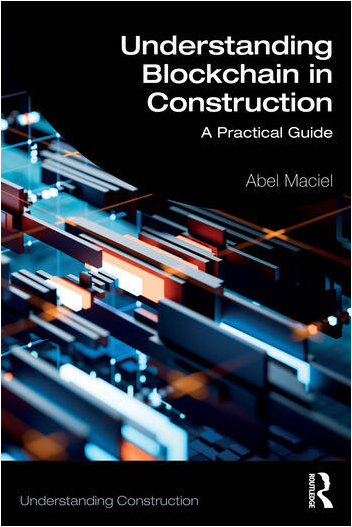
Understanding Blockchain in Construction: A Practical Guide
Provider: Routledge
Format: Book
Publication date: 2026
Understanding Blockchain in Construction: A Practical Guide, is intended to address a persistent gap in the sector: the lack of practical, construction-focused material on blockchain that moves beyond general hype or purely financial use cases. The book examines how blockchain relates to trust, traceability, smart contracts, data exchange and implementation challenges across construction and infrastructure contexts.